


Industry Insight: Food processing has moved beyond the excitement of future-facing technology and into the harder reality of implementation. Manufacturers are not simply looking for AI, automation, non-thermal processing or connected equipment because they sound innovative. They need systems that solve live factory problems: labour shortages, downtime, energy use, reformulation, hygiene control, traceability and audit pressure.
The strongest investments will be those that improve more than one part of the operation. A connected processing line, for example, can support throughput, maintenance, food safety, waste reduction and compliance evidence at the same time. Likewise, reformulation is no longer just a product development issue. It affects mixing, cooking, shelf life, allergen control, packaging and validation.
For senior teams, the priority is shifting from asking what technology can do to asking whether it can be integrated, maintained, cleaned, validated and justified commercially. In 2026, the competitive advantage in food processing will come from practical deployment, not headline innovation.
Food processors are no longer treating automation, traceability and reformulation as future ambitions. They are becoming everyday operational requirements as regulation, labour pressure, sustainability targets and retailer expectations reshape investment decisions across the production floor.
Food processing is moving from the age of “what could be possible” into the harder reality of “what can be implemented, validated and paid back”. Over the past year, technologies such as AI, digital twins, non-thermal preservation, precision fermentation and automated inspection have continued to attract attention, but the conversation has changed. For manufacturers, the value now lies less in novelty and more in measurable operational impact.

The pressure is coming from several directions at once. Labour shortages are making repeatable automation more attractive. Energy and water costs are forcing processors to reassess thermal treatment, refrigeration, cleaning and waste streams. Retailers and regulators want stronger evidence of safety, provenance and compliance. At the same time, reformulation is no longer simply a marketing exercise. It is becoming a response to advertising restrictions, nutrition policy, allergen management and ingredient availability.
This creates a more demanding investment environment. A new processing line must not only increase throughput. It must also reduce waste, improve hygiene, capture data, simplify audits, support maintenance teams and remain flexible enough to handle new recipes, formats and regulatory requirements.
From technology promise to factory control
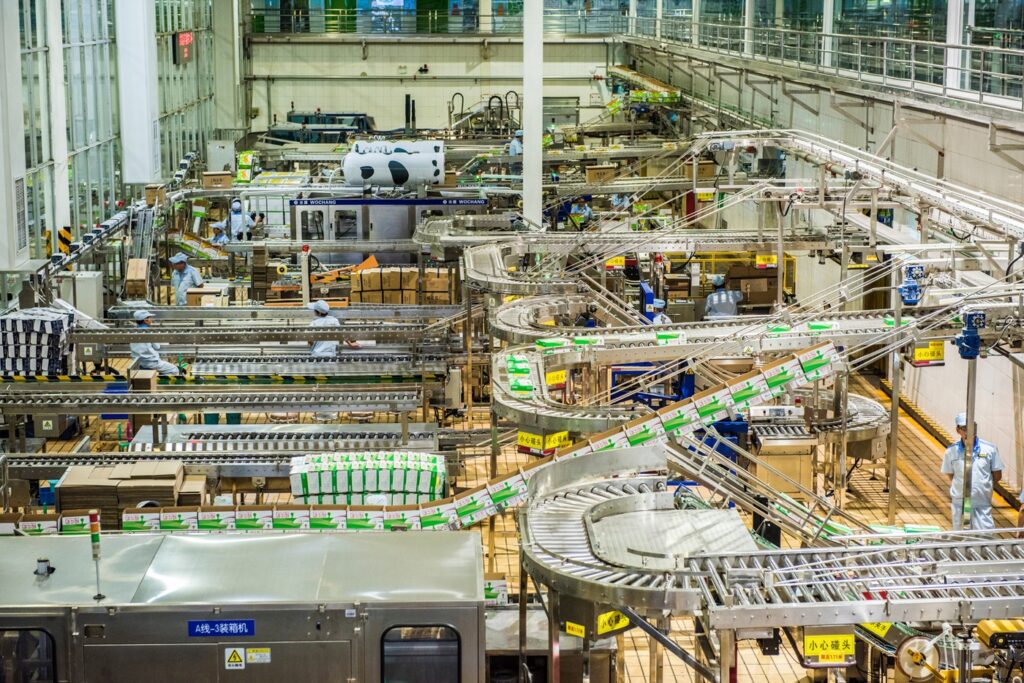
Automation in food processing is no longer limited to robots at the end of the line. The strongest business case now sits around connected production, where sensors, inspection systems, control software and maintenance data are brought together to give manufacturers a clearer view of performance.
That is the key shift. Senior teams are not asking whether automation works. They are asking whether it can be introduced without disrupting production, whether the data is reliable, whether operators can use it, and whether the payback is strong enough in a volatile market.
Connected platforms are becoming more relevant because they help manufacturers move away from isolated pieces of equipment. Modern processing plants need real-time visibility across batching, mixing, thermal processing, filling, chilling, inspection, cleaning and packaging. Instead of treating each stage as a separate function, processors are increasingly looking for systems that connect the whole line and create usable data for production, engineering and technical teams.
For processors, the opportunity is not only faster production. It is better control. A connected line can identify yield losses, monitor temperature deviations, flag abnormal vibration, support predictive maintenance and generate evidence for audits. This matters because unplanned downtime is no longer just an engineering issue. It can affect service levels, retailer relationships, food safety, energy use and labour planning.

Compliance becomes a processing challenge
Regulation is now shaping factory decisions much earlier in the product lifecycle. The UK advertising restrictions for less healthy food and drink came into force on 5 January 2026, including a 9pm TV watershed and restrictions on paid-for online advertising for identifiable less healthy products. For processors in snacks, bakery, confectionery, chilled convenience and ambient categories, this increases the pressure to reformulate products without damaging taste, texture, shelf life or production efficiency.
That is easier to say than to deliver. Reducing fat, salt or sugar can alter water activity, viscosity, mouthfeel, processing behaviour and microbial stability. Reformulation can require new mixing profiles, modified cooking curves, different emulsifiers, alternative sweeteners, adjusted packaging and additional shelf-life validation. In other words, nutrition policy quickly becomes an engineering, quality and operations issue.
There are further changes on the horizon. From December 2026, folic acid fortification requirements will affect non-wholemeal common wheat flour, with implications for flour producers, bakers, ingredient declarations and downstream manufacturers using fortified flour. Meanwhile, precautionary allergen labelling is moving towards a more evidence-based approach, with greater focus on thresholds, cross-contact risk and the difference between genuine risk and defensive labelling.
For food processors, this points towards more precise allergen risk management. Blanket “may contain” labelling is under pressure because it can reduce consumer choice and weaken confidence. The alternative is better segregation, validated cleaning, zoned production, environmental monitoring and stronger evidence that cross-contact risk is being controlled.
Packaging compliance is also moving closer to processing strategy. Restrictions on PFAS in food contact packaging are creating pressure on suppliers and manufacturers to review coatings, barriers and food contact materials. This is not only an issue for packaging suppliers. Processors exporting into regulated markets will need to work with converters, material suppliers and testing partners to ensure barrier performance, grease resistance, sealing performance and compliance can all be maintained.
Food safety becomes more data-led
Food safety has always depended on good process control, but the level of evidence expected is rising. Manufacturers are under growing pressure to show not only that products are safe, but that the systems behind them are robust, monitored and capable of identifying problems quickly.
That context makes advanced inspection and monitoring more commercially important. X-ray systems, metal detection, checkweighing, seal inspection and machine vision are increasingly being integrated into processing and packing lines rather than treated as standalone quality checks. The aim is to catch problems earlier, reduce false rejects, protect brand reputation and provide usable data when something goes wrong.
The same logic applies to hygiene. Automated Clean-in-Place systems, hygienic stainless-steel design, antimicrobial surfaces, drain design, air handling and high-care zoning are not premium extras for many categories. They are becoming baseline requirements, particularly in chilled, ready-to-eat, dairy, meat, bakery and fresh produce operations.
The next stage is predictive food safety. Instead of relying only on end-product testing or retrospective paperwork, manufacturers are beginning to use live process data to identify risk patterns. Temperature deviations, cleaning exceptions, line stoppages, operator interventions, supplier changes and environmental swabs can all form part of a more intelligent risk picture.
New processes must protect quality as well as shelf life
Non-thermal and lower-impact processing technologies remain important, but their role is becoming more practical. High pressure processing, pulsed electric fields, cold plasma, ultrasound and other emerging methods are attractive because they can help extend shelf life while protecting freshness, colour, flavour and nutritional quality.
For manufacturers, the commercial case is strongest where these technologies solve a specific operational problem. That might mean extending the life of chilled juices without heat damage, improving extraction yields, reducing preservatives, supporting clean-label claims, or preserving the texture of plant-based and premium fresh products.
However, adoption depends on validation. Food processors need to understand microbial reduction, process uniformity, throughput, packaging compatibility, energy demand, maintenance requirements and the cost per unit. A technology that works in trials must still fit into a production schedule, pass retailer scrutiny and deliver consistent results at scale.
The same applies to cryogenic freezing, spiral freezers, closed-loop water systems and heat recovery. These are not simply sustainability upgrades. They are tools for protecting quality, reducing waste and controlling resource costs. As energy, water and carbon reporting become more important, processing equipment will increasingly be judged by total cost of ownership rather than purchase price alone.
Novel foods move into controlled pathways
Alternative proteins, precision fermentation and cell-cultivated products are still part of the food processing story, but the tone has matured. The immediate question is less about disruption and more about safety assessment, scale-up, consumer trust and regulatory readiness.
Cell-cultivated products are moving through controlled regulatory pathways, with authorities working alongside industry to understand production risks, safety evidence and approval processes. That matters because cultivated meat and similar products will need clear evidence around production controls, contamination risks, allergenicity, nutrition and consistency before they can move into mainstream food supply.
Precision breeding is also entering a more defined phase. For processors, this could eventually support ingredients with improved nutrition, resilience, functionality or processing performance. But it also means technical teams will need to understand authorisation status, labelling implications, customer expectations and supply chain controls.
Controlled environment agriculture is another area where processing and food safety are becoming closely linked. Vertical farms and indoor growing systems can reduce exposure to some external variables, but they introduce new challenges around water quality, surface hygiene, harvesting systems, microbial monitoring and integration with chilled processing.
Traceability moves beyond blockchain claims
Traceability has been discussed for years, often through the lens of blockchain. The more useful conversation now is about interoperability. Manufacturers need systems that connect supplier data, batch records, process conditions, quality checks, packaging codes, dispatch records and customer complaints in a way that can be used quickly during an audit or recall.
Deforestation rules, origin requirements, fraud prevention and retailer expectations are all pushing traceability further upstream. For food processors using ingredients such as cocoa, coffee, soy, palm derivatives or relevant composite products, this increases the need for reliable supplier documentation and product-level traceability. It also places more pressure on ERP systems, procurement teams and technical departments to work from a shared version of the truth.
Wider business compliance is expanding too. Food manufacturers face increasing expectations around fraud prevention, supplier due diligence, product authenticity and internal controls. In food processing, where substitution, mislabelling, origin claims and certification all carry commercial value, fraud prevention needs to sit alongside food safety and quality management.
The skills gap is the hidden bottleneck
The biggest barrier to smarter processing may not be equipment availability. It may be engineering capability. As technology uptake increases, manufacturers need more people who understand both traditional food production and modern digital systems.
This is a serious issue for automation-led investment. A factory can buy connected equipment, but it still needs people who can maintain sensors, interpret data, manage PLCs, troubleshoot robotics, understand hygienic design and work within food safety systems. In many businesses, the same engineering teams are already dealing with ageing assets, labour gaps, energy projects and urgent breakdowns.
For suppliers, this changes the sales conversation. Manufacturers need more than machinery. They need training, remote support, spares availability, integration advice, validation support and clear evidence of lifecycle cost. Equipment that is difficult to clean, hard to maintain or dependent on specialist knowledge that the site does not have will struggle, even if the headline technology looks impressive.
Implementation is the competitive advantage
The next stage of food processing will be defined by practical implementation. Manufacturers are not short of innovation. They are short of time, skills, certainty and margin. The winning technologies will be those that solve multiple problems at once: improving productivity, strengthening food safety, reducing resource use, simplifying compliance and helping technical teams prove control.
This will favour modular, hygienic, data-rich systems that can be introduced in stages. It will also favour suppliers that understand the pressures of live food production, where downtime is costly, cleaning windows are tight and product quality cannot be compromised.
Food processing is becoming more automated, but it is also becoming more accountable. The factory of the future will not only need to make safe, affordable and appealing products. It will need to prove how they were made, why they are compliant, where the ingredients came from, how risks were controlled and how efficiently resources were used.
For senior decision-makers, that makes processing technology a strategic investment rather than an operational upgrade. The question is no longer whether smarter systems are coming. It is whether manufacturers can implement them fast enough, securely enough and intelligently enough to protect both margin and trust.
Are non-thermal processing technologies becoming mainstream?
Technologies such as high pressure processing and pulsed electric fields are gaining interest where they can extend shelf life, protect quality and reduce reliance on heat or preservatives. Adoption depends on validation, throughput, packaging compatibility, cost per unit and how easily the technology can be integrated into existing production lines.
What role does traceability play in modern processing?
Traceability is moving beyond basic batch records. Manufacturers increasingly need connected systems that link supplier data, production records, inspection results, packaging codes and dispatch information. This helps with audits, recalls, retailer requirements, fraud prevention and regulations affecting supply chain transparency.
How are HFSS rules affecting food processors?
HFSS restrictions are increasing pressure on manufacturers to reformulate products that are high in fat, salt or sugar. This can affect taste, texture, shelf life, processing behaviour and labelling. Reformulation may require changes to mixing, cooking, packaging, ingredient sourcing and validation.
Why is automation becoming more important in food processing?
Automation helps processors manage labour shortages, improve consistency, reduce downtime and increase line visibility. Connected systems can also support predictive maintenance, quality control, audit records and real-time performance monitoring. The strongest business case is often found where automation reduces waste, improves uptime and strengthens compliance at the same time.
What are the biggest trends in food processing?
The biggest trends are connected automation, reformulation, data-led food safety, hygienic equipment design, non-thermal preservation, traceability and more efficient use of energy and water. The common theme is implementation. Manufacturers are looking for technologies that improve productivity, reduce waste, support compliance and deliver measurable return on investment.