


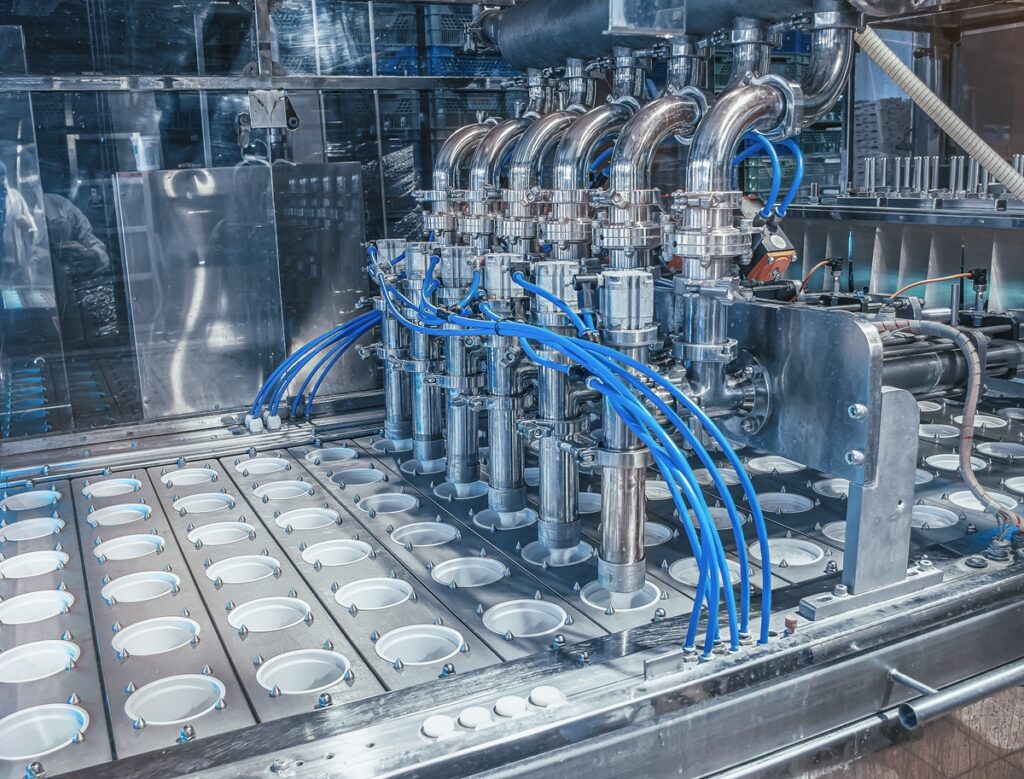
Industry Insight: Engineering strategy in food and beverage manufacturing is shifting from large-scale replacement projects to targeted upgrades that improve performance, compliance, energy use and line flexibility. Smart sensors, adaptive drives, AI inspection, digital twins and modular components are allowing manufacturers to modernise existing assets without the disruption or capital cost of full-line renewal.
Food and beverage manufacturers are under pressure from almost every direction. Retail margins remain tight, labour remains difficult to secure, packaging rules are becoming more complex and production lines are being asked to handle more SKUs, shorter runs and faster changeovers.
In this environment, engineering investment is becoming more precise. Rather than replacing entire lines, many manufacturers are now upgrading the components, controls and digital layers that determine how well existing equipment performs. The result is a more practical form of modernisation: one that focuses on bottlenecks, weak points, data gaps and compliance risks rather than wholesale reconstruction.
This is changing the role of engineering and components across the sector. Motors, drives, actuators, conveyors, sensors, inspection systems and control platforms are no longer viewed simply as mechanical or electrical necessities. They are becoming strategic assets that influence throughput, energy use, quality assurance, traceability and resilience.
Smarter investment in existing assets
For many manufacturers, the business case for full-line replacement is harder to justify than it once was. Capital budgets are being scrutinised closely, while production demand continues to shift quickly. Targeted engineering upgrades offer a more manageable route to improvement, especially where a single component or control limitation is restricting the performance of an otherwise viable line.
Variable speed drives can improve energy efficiency and line control. Servo systems can increase precision during filling, sealing, cutting or depositing. Upgraded sensors can give operators earlier warning of vibration, temperature drift, pressure changes or lubrication issues. Modern HMIs and PLC upgrades can improve visibility without requiring an entirely new machine platform.
The attraction is not only cost. Targeted upgrades can often be planned around existing maintenance windows, reducing downtime and allowing manufacturers to improve performance without major disruption to production. For factories running high-volume or high-care operations, that practicality is often as important as the engineering gain itself.
Packaging change is driving mechanical change
Packaging is one of the clearest examples of why component-level engineering matters. New sustainability targets, recyclability requirements and producer responsibility rules are forcing manufacturers to rethink the materials they run through their lines.
The EU Packaging and Packaging Waste Regulation entered into force in February 2025 and will generally apply from 12 August 2026, bringing stronger requirements around packaging recyclability, minimisation and circularity. (Environment) In the UK, Extended Producer Responsibility for packaging is also increasing the importance of packaging data and recyclability, with modulated disposal fees beginning from year two of the scheme, covering 2026 to 2027 calculations. (GOV.UK)
For engineering teams, this is not just a compliance issue. New packaging materials behave differently on production lines. High-recycled-content films, mono-material structures, paper-based formats and lighter-weight packaging can have different tensile strength, sealing windows, stiffness and friction characteristics. A line designed around traditional plastic materials may struggle with creasing, tearing, poor seals or inconsistent pack presentation.
That makes adaptive engineering increasingly important. Upgraded sealing jaws, more accurate temperature control, improved web tension systems, servo-driven adjustments and smarter inspection can help manufacturers manage packaging transition without sacrificing efficiency. In many cases, the packaging change cannot be separated from the engineering change.

Digital twins move from concept to practical tool
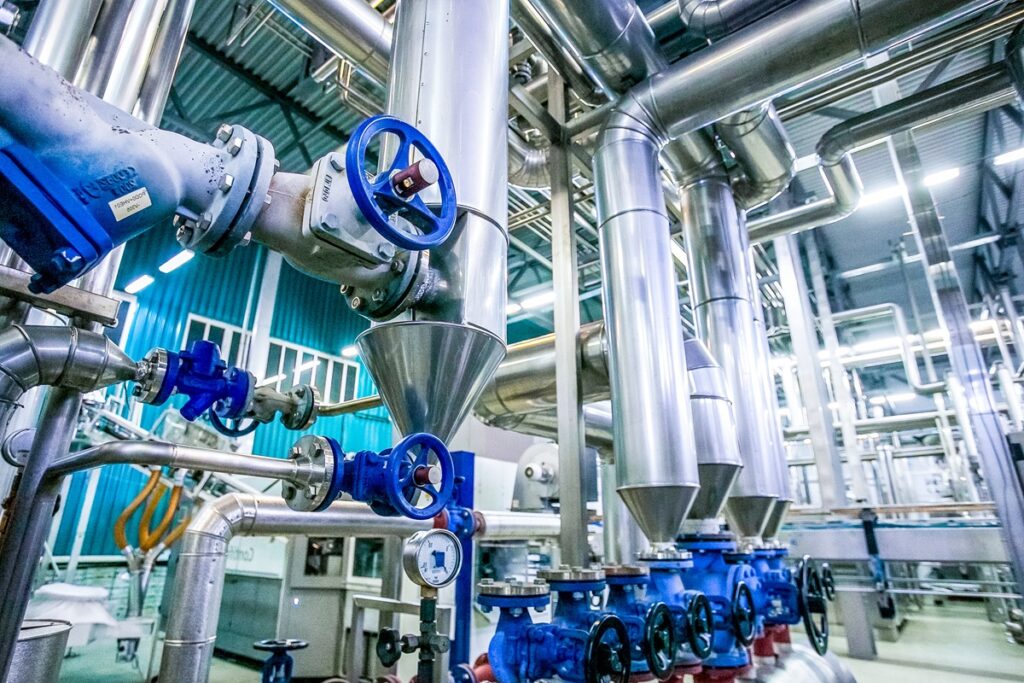
Digital twins are becoming a more serious part of food manufacturing engineering strategy. Instead of relying only on historical production data or physical trial-and-error, manufacturers can use digital models to test layout changes, energy use, throughput scenarios and process adjustments before making changes on the factory floor.
For food and beverage operations, the value is especially strong where small changes can have major consequences. A digital twin can help assess how a new conveyor layout affects line balance, how a change in cooling profile affects shelf life, or how a different packaging format influences bottlenecks downstream.
Recent research has also highlighted the role of digital twins in linking sensors, AI and process models to support near-real-time decision-making around food quality, safety and waste. (Frontiers) This matters because the best engineering decisions are increasingly data-led. A component upgrade is easier to justify when a manufacturer can model the expected impact on downtime, energy consumption, yield or maintenance frequency before committing to installation.
Digital twins are not a replacement for engineering judgement. They are a way of strengthening it. By allowing teams to test scenarios virtually, they reduce uncertainty and help manufacturers prioritise upgrades that deliver the clearest operational return.
AI inspection becomes more flexible
Quality control is another area where engineering and digital technology are converging. Traditional inspection systems still have an important role, but AI-enabled vision is making inspection more adaptable, especially for manufacturers handling varied products, multiple pack formats and frequent changeovers.
Edge-AI vision systems can support faster decision-making at line level, reducing dependence on remote processing or delayed analysis. Hyperspectral imaging and advanced optical inspection can also go beyond visible defects, helping identify differences in composition, contamination risk, surface condition or seal integrity that standard cameras may miss.
This is particularly valuable in food and beverage environments where products are naturally variable. Bakery, meat, produce, snacks and ready meals all present inspection challenges because shape, colour and texture are not always uniform. AI-supported systems can be trained to recognise acceptable variation while still detecting genuine defects.
The wider direction is clear: inspection is moving from fixed rules toward adaptive intelligence. For manufacturers, that can mean fewer false rejects, stronger quality assurance and less manual intervention.
Data-led maintenance and engineering skills
Predictive maintenance has been discussed for years, but the technology is becoming more practical as smart components become easier to integrate. Sensors on motors, pumps, bearings, compressors and conveyors can now help engineers detect deterioration earlier, supporting maintenance decisions based on condition rather than fixed schedules alone.
The next stage is the use of AI-supported maintenance assistants. Instead of engineers having to interpret every data stream manually, natural-language tools can help query machine performance, identify likely causes of faults and suggest next steps. This does not remove the need for skilled engineers, but it can reduce diagnostic time and help less experienced team members access machine knowledge more quickly.
That is important in a sector where engineering skills remain under pressure. Food factories need people who understand mechanical systems, automation, food safety, hygiene, data and sustainability. Smart components can help close part of that gap by making equipment more transparent and easier to diagnose.
Sustainability becomes an engineering issue
Sustainability targets are also changing the engineering brief. Energy, water, compressed air, steam and refrigeration are no longer background utilities. They are measurable performance areas, increasingly linked to cost, reporting and customer expectations.
Engineering upgrades can deliver meaningful improvements. More efficient motors and drives reduce electricity demand. Better compressed air monitoring can identify leaks that quietly waste energy. Improved heat recovery can reduce thermal losses. Smarter pump control can cut unnecessary running time. Optimised CIP systems can reduce water, chemical and energy use while maintaining hygiene standards.
Thermal processing is another area attracting attention. As manufacturers look to reduce reliance on fossil fuels, there is growing interest in electrification, heat pumps, radio-frequency heating, microwave technologies and improved heat transfer. Not every process can be converted quickly, but component-level upgrades can still improve efficiency and give manufacturers more options as energy strategy evolves.
The key point is that sustainability is no longer separate from engineering. It is increasingly embedded in the specification of every motor, valve, sensor, heat exchanger, control system and packaging interface.
Compliance through better control
Regulation is pushing manufacturers toward stronger evidence, not just stronger performance. It is no longer enough to say that a process is controlled; manufacturers increasingly need data to prove it.
The UK’s HFSS advertising restrictions, which came into force on 5 January 2026 for identifiable less healthy food and drink products in TV and paid online advertising, may also indirectly affect manufacturing by encouraging reformulation, recipe changes and new product positioning. (ASA) For some producers, that can mean new ingredients, altered process parameters, different textures, changed filling behaviour or new packaging formats.
When formulations change, engineering often follows. Mixers, depositors, ovens, fryers, fillers, cooling systems and inspection equipment may all need adjustment. Components that allow faster, more repeatable changeovers become more valuable because they help manufacturers respond to commercial and regulatory shifts without compromising line stability.
Compliance is therefore becoming part of the engineering specification. Traceable settings, automated records, connected inspection data and integrated control systems all help manufacturers demonstrate that production is being managed consistently.
Building flexibility into the line
The modern food and beverage production line must be flexible without becoming fragile. Manufacturers need equipment that can handle different pack sizes, shorter runs, alternative materials and new product launches, but they also need reliability, hygiene and repeatability.
That balance is where engineering components matter. Quick-change tooling, modular conveyors, hygienic motors, easy-clean components, plug-and-play sensors and open communication protocols can make a line easier to adapt. Connectivity standards such as OPC UA and MQTT also help manufacturers avoid isolated systems that cannot share data with wider factory platforms.
The best engineering upgrades are therefore not just about solving today’s problem. They should also make the line easier to change tomorrow.
Engineering as a strategic advantage
The food and beverage industry is entering a period where engineering decisions will have a greater influence on competitiveness. Factories that can adapt quickly, prove compliance, reduce waste, control energy use and maintain consistent quality will be better placed than those relying on ageing assets with limited visibility.
This does not mean every manufacturer needs the newest machine. In many cases, the smarter route is to understand where performance is being lost and then upgrade the specific components, controls and data systems that will make the greatest difference.
Engineering and components may sit behind the visible product, but they increasingly determine the speed, efficiency and resilience of the whole operation. The future of food manufacturing will not only be built through new factories. It will also be engineered into existing lines, one intelligent upgrade at a time.
How can AI improve engineering performance?
AI can improve engineering performance by helping manufacturers detect faults, interpret sensor data, optimise inspection and support faster maintenance decisions. AI-enabled systems can also improve quality control where products or packaging vary between runs.
What role do digital twins play in food manufacturing?
Digital twins help manufacturers model production processes before making physical changes. They can support decisions around layout, energy use, throughput, quality, maintenance and process optimisation.
How are packaging regulations affecting engineering decisions?
Packaging regulations are affecting engineering decisions by changing the materials manufacturers need to run. Recyclable, lighter-weight, fibre-based or high-recycled-content packaging can require different sealing, handling, tension control and inspection systems.
Why are manufacturers upgrading components instead of replacing full lines?
Manufacturers are upgrading components because targeted improvements can reduce cost, downtime and disruption. Many existing production lines remain mechanically sound, but benefit from smarter controls, better data capture, improved energy efficiency or greater flexibility.
What are engineering upgrades in food and beverage manufacturing?
Engineering upgrades are targeted improvements to production equipment, components or control systems. They can include new drives, sensors, motors, inspection systems, conveyors, software, automation or hygienic components designed to improve performance without replacing an entire line.