


Industry Insight: The most important change in materials handling is not the arrival of another robot, scanner or software platform. It is the recognition that every physical movement is also a production event, a traceability event and increasingly a cost event.
Materials handling has moved from a back-of-house necessity to a frontline test of productivity, traceability and resilience. Connected conveyors, automated storage, mobile robotics and smarter warehouse software are helping food and drink businesses reduce stoppages, protect cold-chain integrity and capture the data needed for compliance. The strongest results come not from isolated machines but from designing one controlled flow from intake to dispatch.
A pallet delayed at intake can starve a line. A case diverted incorrectly can compromise allergen segregation. A door left open can increase refrigeration demand. A missed scan can weaken recall readiness, retailer compliance or environmental reporting. Modern handling creates value by connecting movement, condition and identity in one operating system.
That changes the investment question. Manufacturers should not begin by asking which robot to buy. They should ask where product waits, where information disappears, where people face avoidable risk and where small failures create expensive disruption. Automation then becomes a response to a measured operational problem rather than a technology project searching for a purpose.
Flow Is the Factory: Why Internal Movement Now Sets Output
Materials handling has always linked intake, processing, packing, storage and dispatch, but its influence is becoming harder to ignore. Faster production equipment cannot deliver its promised output when ingredients arrive late, packaging is unavailable, pallets queue at transfer points or finished goods cannot clear the line.
Food and drink sites add shelf life, temperature control, hygiene zoning, allergen management, fragile packaging and rapid changeovers to the challenge. A generic warehouse may tolerate temporary congestion; a chilled-food factory working to short retail windows may not.
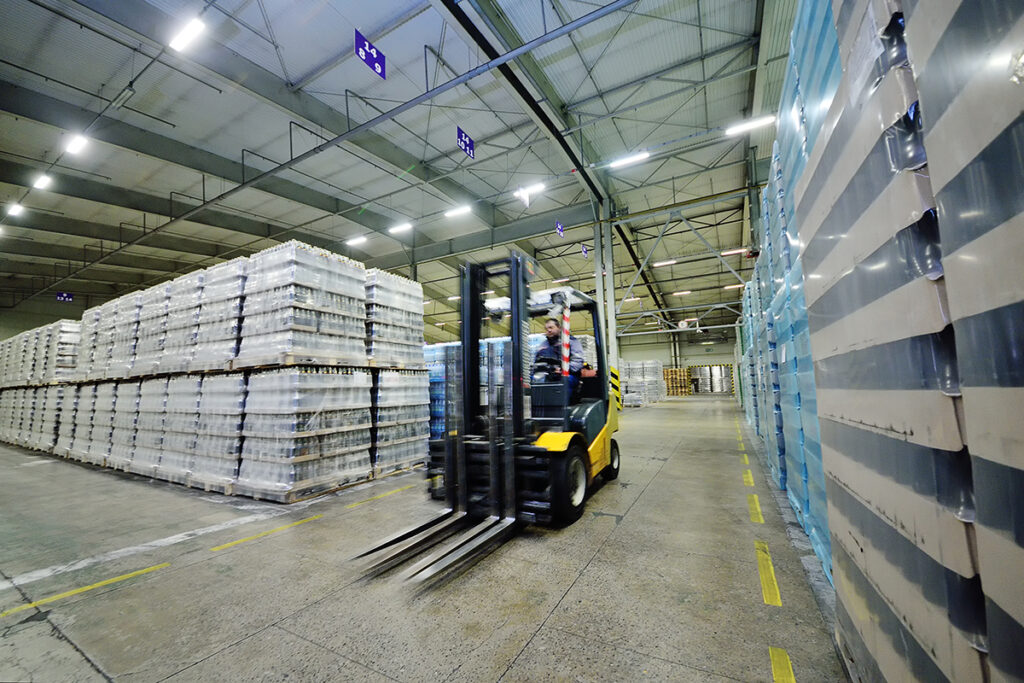
The first opportunity is visibility. Manufacturers need to measure dwell time as closely as line speed: how long ingredients wait at intake, where packaging replenishment interrupts production, how often forklift and pedestrian routes overlap, how many touches a case receives and how long finished pallets remain outside controlled storage.
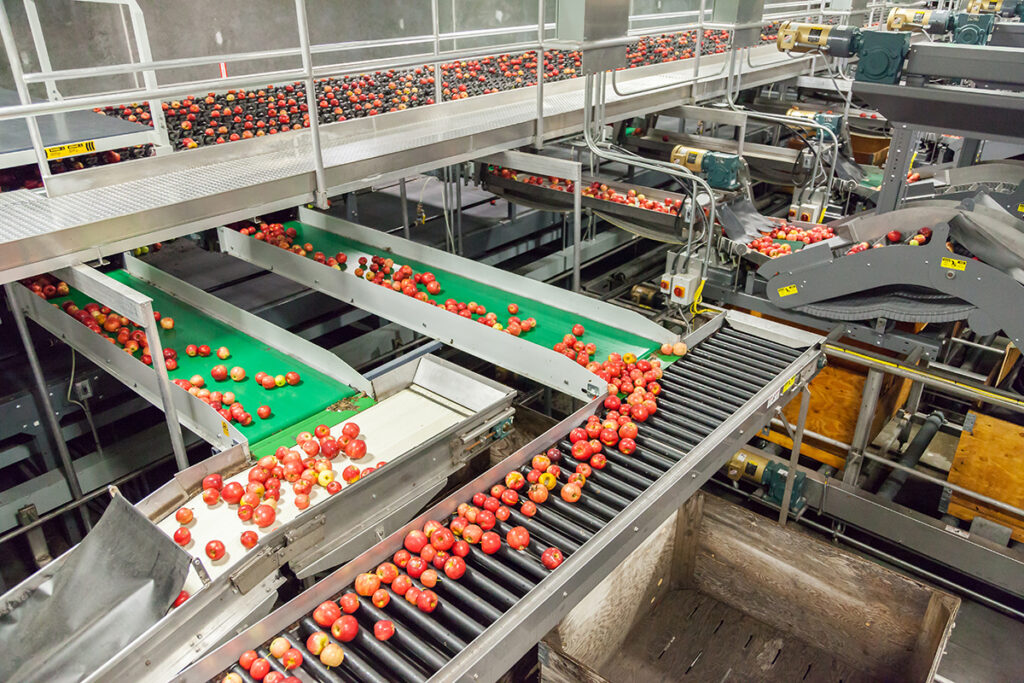
Conveyors, lifts, robotic palletisers, automated storage and retrieval systems, autonomous mobile robots and warehouse execution software can then be applied to the real constraint. The goal is not maximum automation but minimum unnecessary movement. A well-designed system reduces repeated handling, protects stock rotation and creates predictable buffers, allowing the process rather than individual experience to absorb peaks, changeovers and disruption.

Connect the Motion: From Standalone Automation to Orchestrated Handling
Traditional automation largely follows fixed rules. A conveyor moves at a set speed, an automated guided vehicle follows a defined route and a warehouse management system issues tasks according to programmed priorities. Those systems remain valuable, but the direction of travel is towards more responsive orchestration.
Warehouse execution systems can balance work between conveyors, storage, picking stations and mobile robots. The next step is agentic AI: software agents capable of interpreting conditions, proposing actions and, within defined limits, changing task sequences or resource allocation. Gartner identified agentic AI and physical AI among the leading supply-chain technology trends for 2026, reflecting a shift from systems that report a bottleneck to systems that help resolve it. that could mean redirecting a robot around an obstruction, changing replenishment priorities when a packing line accelerates, assigning another dock when a vehicle is late or protecting temperature-sensitive stock after a cold-room alert.
Autonomy should not mean a loss of control. A system may be authorised to re-route a pallet, but not to override allergen segregation, release quarantined stock or alter a food-safety hold. Permissions, escalation rules, audit trails and human review remain essential wherever decisions affect product status, safety, legality or customer specification.
Mobile robots are also improving through combinations of cameras, LiDAR, mapping and other sensors. Yet wet floors, steam, condensation, reflective surfaces and washdown regimes still demand site-specific testing. Most near-term value will come from tightly defined applications such as depalletising, case handling, pallet movement and repetitive end-of-line work, rather than the humanoid robots attracting the headlines.
Keep Cold, Lose Delay: Automation in Temperature-Controlled Storage
Cold storage creates one of the clearest cases for automation. Labour is difficult to recruit and retain in sub-zero environments, personal exposure must be controlled, refrigeration is energy-intensive and every unnecessary door opening introduces heat and moisture.
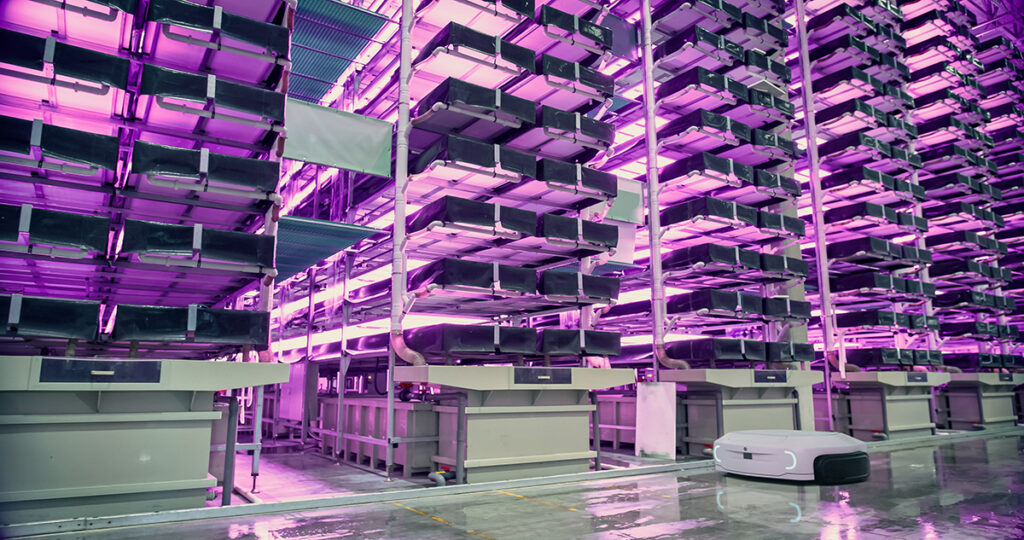
Automated high-bay storage places more product within a smaller footprint, while cranes, shuttles and conveyors reduce the need for people to work continuously inside a freezer. Fully automated high-bay frozen facilities are already operating in the UK, showing that “lights-out” cold storage is no longer simply a future concept. es not automatically reduce energy use. The benefit comes from the complete design: storage density, controlled door cycles, reduced infiltration, efficient refrigeration, good insulation and software that avoids unnecessary movements. Motors, controls and charging systems must be included in the calculation.
Cold-chain data is equally important. Temperature readings should be connected to the identity and location of the load rather than held in a separate system. Event-based standards such as GS1 EPCIS can link movement with time, place and sensor information, creating a more useful history of what happened to a pallet or case during storage and distribution. ere It Moves: Turning Handling Events into Compliance Data
The loading bay, conveyor transfer and pallet wrapper are becoming data-capture points. Several major compliance regimes now depend on businesses knowing not only what they bought and sold, but which material, batch or logistics unit moved through each stage.
In the UK, extended producer responsibility for packaging requires affected organisations to collect and report packaging information. Large producers must report packaging activity, type, class, material and weight, generally every six months. Recyclability data is also increasingly important as modulated fees begin to influence disposal costs. nology cannot determine packaging compliance on its own, but it can protect the data beneath it. Vision systems can verify the case or label at the line; checkweighers can flag unexpected variation; print-and-apply systems can connect a pallet identifier with the products loaded; and scan tunnels can record receipt and dispatch automatically. These events need to connect to controlled packaging specifications rather than spreadsheets that may not reflect what was actually produced.
For businesses supplying the United States, the FDA Food Traceability Rule under FSMA 204 remains an important design target even though enforcement has moved. The FDA says it will not enforce the rule before 20 July 2028, but the requirements remain: businesses handling foods on the Food Traceability List must maintain Key Data Elements for Critical Tracking Events and provide information to the FDA within 24 hours. e should be used to test data exchange across the chain. A manufacturer can hold excellent internal records and still struggle if supplier lot codes, logistics labels and customer systems do not align. Serial Shipping Container Codes can connect physical pallets with electronic dispatch and receiving records, while EPCIS provides a common structure for sharing event data. station Regulation creates another intake challenge for businesses trading relevant commodities and derived products. It will apply from 30 December 2026 to large and medium-sized operators, with a later date for most micro and small operators. It covers cattle, cocoa, coffee, palm oil, rubber, soy and wood, requiring operators to demonstrate that covered products are deforestation-free and legally produced. tems may therefore need to validate supplier, commodity, lot and due-diligence references before material is released. Where ingredients are blended or transformed, the data architecture must preserve the relationship between inputs and outputs rather than losing provenance at the first internal transfer.
Digital Product Passports also require precision. The EU’s DPP Registry became operational in July 2026, but food and feed are excluded from the core Ecodesign for Sustainable Products Regulation. DPP requirements are being introduced progressively for selected product groups, not as an immediate universal passport for food. Manufacturers should prepare for a broader move towards structured product and materials data without assuming every food item now needs a DPP. esign: Engineering Automation for Food Environments
Food manufacturing places demands on handling equipment that are easy to underestimate. Throughput figures and navigation demonstrations mean little if a system is difficult to clean, traps debris, cannot withstand chemicals or prevents proper inspection.
Hygienic design extends beyond direct food contact. Conveyors and transfer systems can create indirect contamination risks around open product, high-care boundaries and areas where water or residues accumulate. EHEDG guidance addresses hygienic belt-conveyor design in both direct-contact applications and areas carrying an indirect contamination risk. should examine frame construction, hollow sections, drainage, access, belt release, cable routing, wheel design, sensor housings and charging locations. Cleaning teams need safe access, while maintenance teams must inspect components without compromising controlled areas.
Routing logic must also recognise allergen status, hygiene zone, temperature class, quarantine condition and destination. A robot may be able to take the shortest route, but the shortest route may not be the compliant one.
Safety cannot be delegated entirely to sensors. HSE guidance stresses separation and sufficient clearance where pedestrians share routes with automatic vehicles, while ISO 3691-4 sets safety requirements for driverless industrial trucks and their systems. Site-wide traffic management is vital when different suppliers’ AMRs, forklifts and pallet systems operate together. fety functions require similar discipline. European rules continue to evolve where AI is embedded in machinery or performs a safety-critical function. Operators should document the intended function, understand system limits, maintain human oversight and control any change that could alter safety behaviour. re You Purchase: Digital Twins and the New Investment Case
The most expensive automation mistake is not buying too little. It is automating the wrong process.
Digital twins and discrete-event simulation allow manufacturers to test layout, capacity and control strategies before changing a live site. Models can examine seasonal peaks, SKU mixes, pallet profiles, freezer traffic, dock schedules, equipment failures and the effect of adding or removing vehicles.
The model should be built around variability rather than an ideal day. Late vehicles, line stoppages, rejected pallets, label failures, stock holds, urgent orders and loss of connection to the host system all need testing. The purpose is not to prove that a design works, but to discover how it fails while changes remain inexpensive.
ROI should also extend beyond labour replacement. Relevant gains can include higher line availability, less product damage, improved stock accuracy, fewer temperature excursions, faster recalls, reduced manual handling, better use of floor space and growth without extending the building. Against these sit integration, software, cybersecurity, maintenance, cleaning, charging, spares, training and obsolescence.
A controlled pilot can reduce risk, particularly when it focuses on one constrained route or repetitive task and is designed as part of a scalable architecture. It reveals how the technology performs with real products, floors, cleaning regimes and employees before the business commits across the site.
Resilience Is a Route: Building Adaptable Intake-to-Dispatch Systems
Materials handling is no longer a collection of forklifts, conveyors and racking. It is the physical layer of the food business’s operating data.
When movement and information remain disconnected, manufacturers struggle to answer basic questions quickly: where a batch is, how long it has waited, whether it remained in specification, which packaging was used, whether it can be released and which customer received it. Connected handling infrastructure turns those questions into routine operational visibility.
The competitive advantage will not come from owning the most robots. It will come from moving every ingredient, pack, case and pallet with greater control: equipment suited to the hygiene environment, software that respects food-safety rules, AI operating within clear guardrails and traceability data that follows the physical product from intake to dispatch.
What is smart materials handling in food and drink manufacturing?
Smart materials handling combines conveyors, palletisers, automated storage, scanners and mobile robots with software and data systems. Its purpose is to control how ingredients, packaging and finished goods move through a facility. In food operations, the system must account for hygiene zones, allergens, temperature, batch status, shelf life and traceability rather than focusing only on speed.
Are autonomous mobile robots suitable for food factories?
They can be, but suitability depends on the environment and task. Dry warehouses and end-of-line areas are usually easier than wet, steaming or high-care zones. Buyers should assess cleanability, ingress protection, chemical resistance, sensor performance, route segregation, charging location and fault recovery. A site trial under real operating and cleaning conditions is essential.
How can materials handling automation improve food traceability?
Automation captures data when product moves. Barcode or RFID scans, pallet identifiers, vision inspection, checkweighing and location events can connect a batch with time, place, condition and destination. This reduces manual entry and makes recall information easier to retrieve, particularly when handling data is integrated with ERP, warehouse, manufacturing and quality systems.
What regulations are affecting materials handling and traceability?
Important developments include UK extended producer responsibility for packaging, the EU Deforestation Regulation and the US FDA Food Traceability Rule under FSMA 204. Each has a different scope, but all increase the need for accurate, connected data. Manufacturers must also consider workplace transport, machinery safety, hygienic design and customer-specific labelling requirements.
How should a food manufacturer calculate the ROI of automation?
ROI should include more than direct labour savings. Measure the effect on throughput, downtime, damage, stock accuracy, cold-room exposure, manual handling, space use, recall speed and future capacity. Compare those benefits with integration, software, maintenance, cleaning, charging, spares, training and replacement costs. Simulation or a controlled pilot can expose hidden constraints before a larger commitment.