

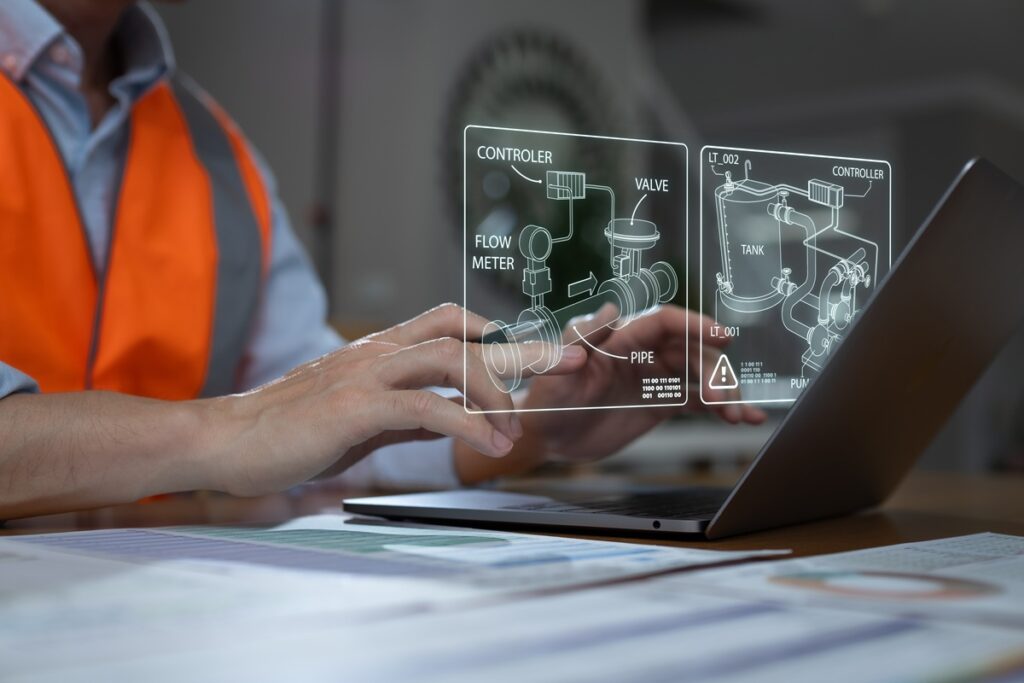
Industry Insight: Flow measurement and control systems help food and beverage manufacturers manage product consistency, water use, energy efficiency, hygiene compliance and process traceability. In 2026, they are becoming increasingly important as factories move towards AI-supported monitoring, sustainability reporting, predictive maintenance and tighter control of valuable ingredients, cleaning cycles and wastewater.
In food and beverage production, flow measurement has always mattered. Every litre of product, cleaning solution, steam, water or ingredient moving through a plant affects cost, quality, safety and throughput. But the role of flow technology is changing. What was once viewed as a process control component is now becoming a strategic data source for manufacturing performance.
For senior production, engineering and operations teams, the question is no longer simply whether liquid, gas or steam is moving at the correct rate. It is whether that flow data can support audit trails, reduce waste, predict faults, validate cleaning, optimise water use and give management a clearer view of what is happening across the factory.
That shift is being driven by three pressures: tighter resource management, more demanding sustainability reporting and the wider move towards connected, intelligent manufacturing.
From Process Reading to Business Intelligence
Traditional flow meters were installed to keep lines running within specification. Today, they are increasingly expected to support wider operational decisions. In beverage filling, sauces, dairy, oils, syrups, CIP systems and steam networks, small measurement inaccuracies can quickly become significant losses.
A slight overfill may appear harmless on one container, but at high volume it becomes product giveaway. A poorly controlled CIP cycle can waste water, chemicals, energy and production time. A leak in a compressed air, steam or water system may go unnoticed until it becomes a maintenance issue. Flow measurement provides the evidence needed to spot these losses before they become embedded in daily operation.
This is why modern flow systems are moving from isolated instruments to connected data points. Electromagnetic, Coriolis, ultrasonic, vortex and thermal mass flow meters all have different strengths, but the direction of travel is the same: more diagnostics, better connectivity and more usable data for operators and managers.

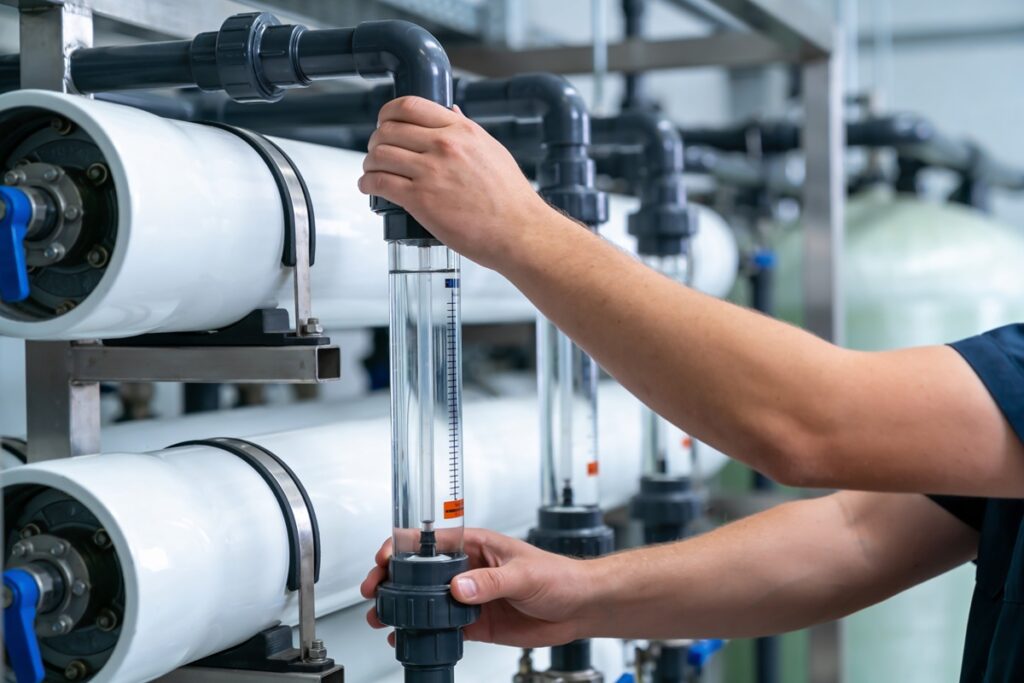
Why Water Data Now Matters More
Water has become one of the strongest reasons to revisit flow measurement strategy. Food and drink production is water-intensive, not only in ingredients but in cleaning, cooling, heating, washing and effluent management.
The regulatory and reporting landscape is also changing. Under ESRS E3, water consumption, withdrawal, discharge, recycling and reuse are part of the sustainability disclosure picture for affected businesses. In the UK, the final UK Sustainability Reporting Standards are now available for voluntary use, while the FCA is consulting on sustainability disclosure rules for listed companies.
For manufacturers, this makes flow data more valuable. A factory cannot credibly report water reduction, recycling or reuse if it lacks reliable measurement points. Estimations may be acceptable for broad internal reviews, but they are weaker when businesses need consistent, auditable and site-level evidence.
This is particularly important for manufacturers operating across multiple sites, supplying major retailers or working within global groups. Water performance is becoming part of procurement, ESG reporting and operational resilience, not just utility management.
Smarter Cleaning and Safer Production
Cleaning-in-place remains one of the most important applications for flow control in food and beverage manufacturing. CIP relies on the correct combination of flow velocity, temperature, time and chemical concentration. If any element is wrong, cleaning may be ineffective or unnecessarily wasteful.
Accurate flow measurement helps validate that cleaning fluids reach the required velocity through pipework and equipment. It can also help reduce over-cleaning by giving operators confidence that the process has achieved the required conditions.
This matters commercially as well as hygienically. Excessive CIP cycles consume water, chemicals, energy and labour. Under-controlled CIP, however, risks contamination, failed audits and product recalls. Flow control gives manufacturers the balance they need: safe cleaning without unnecessary waste.
The proposed UK–EU SPS agreement, expected to take effect in mid-2027, also reinforces the importance of robust hygiene and traceability systems for agri-food businesses. While the agreement is not specifically about flow meters, closer regulatory alignment makes audit-ready process control increasingly valuable.
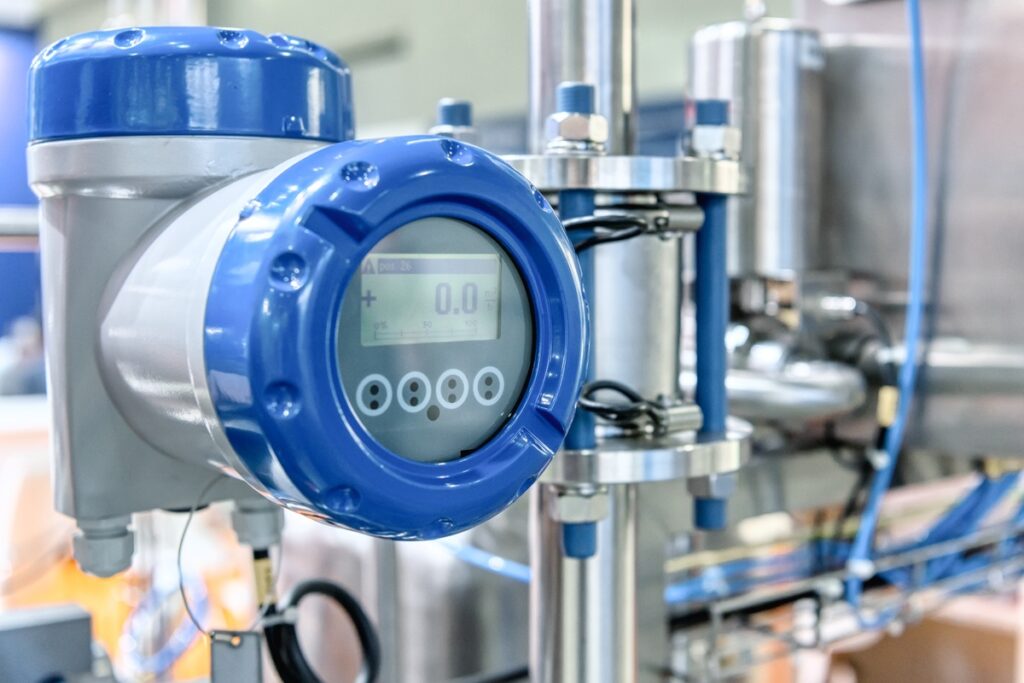
AI, Digital Twins and Predictive Flow Control
One of the biggest changes since last year is the speed at which digital manufacturing has moved from concept to practical deployment. Flow meters are no longer just feeding data into SCADA systems; they are becoming part of predictive and simulation-led environments.
AI-supported monitoring can identify unusual flow patterns that may indicate a blocked valve, leaking seal, pump wear, fouling or incorrect cleaning sequence. Instead of reacting to a failure, engineering teams can investigate before downtime occurs.
Digital twins are also becoming more relevant to flow control. In beverage production, for example, simulation can help model filling behaviour, pressure, turbulence and product movement before physical adjustments are made. Krones has reported using AI and OpenUSD to reduce simulation times from three to four hours to under five minutes, showing how rapidly digital twin technology is advancing in beverage manufacturing.
For food and drink manufacturers, this points to a clear direction: flow data will increasingly feed optimisation models, not just operator screens.
Reducing Product Loss and Ingredient Waste
Flow measurement is also central to reducing shrinkage. High-value ingredients such as oils, flavourings, concentrates, sauces, syrups and dairy components need precise dosing and transfer. Even small inaccuracies can affect recipe consistency, labelling compliance and cost of goods.
Coriolis flow meters are particularly useful where mass measurement, density and accuracy are important. Electromagnetic meters remain widely used for conductive liquids, while ultrasonic systems can offer non-intrusive measurement where hygiene, maintenance access or pipe integrity are key considerations.
The aim is not simply to install the most advanced technology everywhere. It is to match the meter to the product, pipework, cleaning regime, accuracy requirement and data need. A poor specification can create as many problems as no measurement at all.
Packaging, Filling and DRS Readiness
The UK Deposit Return Scheme is planned for 1 October 2027 across England, Northern Ireland and Scotland, covering many single-use drinks containers made from PET plastic, steel and aluminium. For beverage producers, this adds another reason to maintain accurate filling, counting and line control.
DRS is primarily a packaging and collection policy, but its operational impact reaches back into production. High-volume beverage lines will need strong data discipline across filling, labelling, coding and container handling. Flow control is part of that wider accuracy chain, especially where underfill, overfill or inconsistent filling performance can affect compliance, waste and customer confidence.
Self-Verification and Maintenance Confidence
Another important development is the rise of smarter instrument diagnostics. Some modern flow meters can perform continuous health checks, verify performance against internal references and alert operators when conditions move outside expected limits. Endress+Hauser, for example, describes Heartbeat Technology as combining diagnostics, verification and monitoring functions for process optimisation.
For manufacturers, the value is practical. Verification without unnecessary interruption can reduce downtime, support maintenance planning and provide evidence for quality systems. It does not remove the need for proper calibration strategy, but it can make instrument management more efficient and less reactive.
Building a Better Flow Strategy
The most effective approach starts with a process map. Manufacturers should identify where flow data affects cost, quality, safety or compliance. Key areas often include incoming water, product transfer, ingredient dosing, steam, compressed air, CIP, wastewater and recovery loops.
From there, teams can decide which points require high accuracy, which need hygienic design, which need remote monitoring and which should feed wider data systems. The return on investment often comes not from the meter alone, but from the decisions it enables: less giveaway, shorter cleaning cycles, lower water use, fewer breakdowns and stronger reporting.
Flow measurement is no longer just about knowing what is moving through a pipe. It is about building a more controlled, efficient and accountable factory.
Is "smart" flow measurement worth the investment for older production lines?
Yes. Retrofitting legacy lines with modern, connected flow sensors often pays for itself through "hidden" savings—identifying product giveaway, water waste, or inefficient CIP cycles that were previously invisible. It is a foundational step for implementing AI-driven predictive maintenance
How does flow data specifically support ESRS and sustainability reporting?
Regulatory frameworks like the ESRS require precise, auditable data, not estimations. Reliable flow metering provides the "single source of truth" for water consumption and discharge that auditors demand, moving your sustainability claims from voluntary estimates to hard, verifiable evidence.
What is the biggest risk of under-specifying flow meter technology?
Under-specifying leads to "data drift" and maintenance headaches. A meter chosen solely on price often fails to account for hygiene standards (EHEDG/3-A), calibration stability, or the specific viscosity of the food product, leading to inaccurate readings that can cause batch inconsistencies or failed hygiene audits.
Can flow meters help with the upcoming 2027 UK Deposit Return Scheme (DRS)?
While DRS is a collection policy, operational efficiency matters. Flow meters provide the granular line-speed and filling accuracy data needed to reduce waste and ensure high-speed filling lines remain compliant and efficient, preventing under/over-fill losses that impact margins.
How do Digital Twins use flow data?
Digital twins use real-time flow data to create a virtual, dynamic model of your production. This allows engineering teams to simulate process changes (like speeding up a line or altering a cleaning cycle) to test for turbulence, pressure issues, or blockages before risking physical hardware, saving time and preventing downtime.