


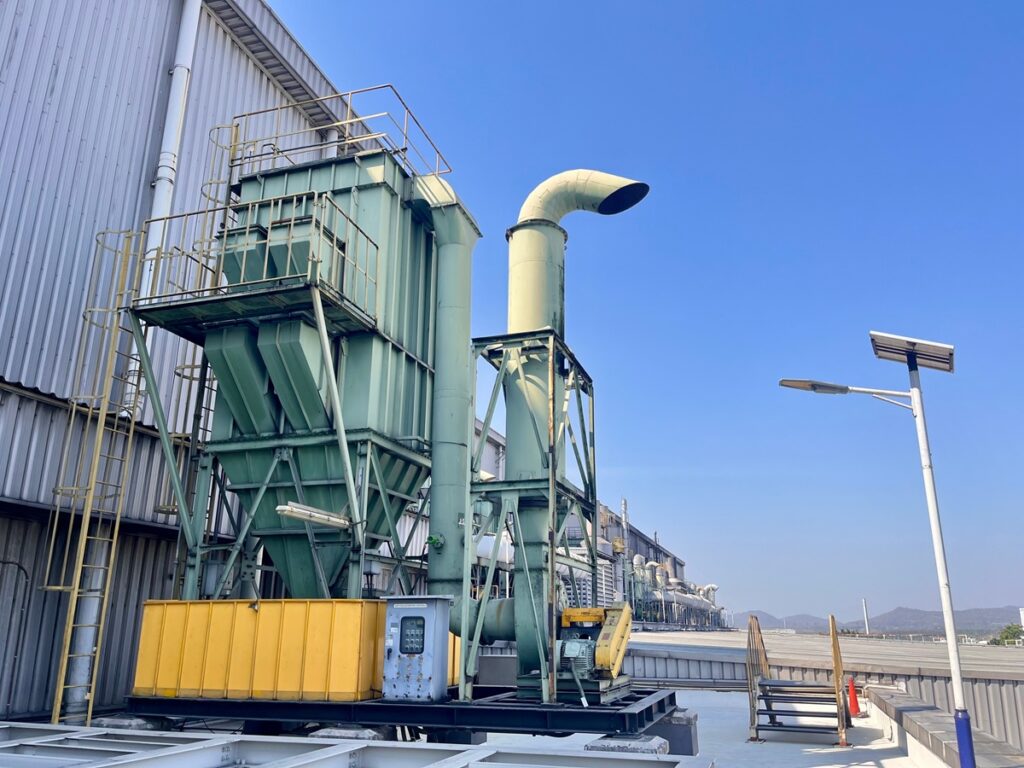
Industry Insight: Dust control has moved from the edge of the factory to the centre of operational risk management. In July, a UK food manufacturer was fined £120,000 after workers were exposed to hazardous inhalable dust. Inspectors identified leaks from machinery, compressed-air blowdown and dry sweeping—basic failures that remain common even as filtration technology becomes more intelligent. on is not that every plant needs the most complex collector available. It is that extraction, filtration, housekeeping, explosion protection and maintenance must operate as one verified system. Connected monitoring now makes differential pressure, airflow, pulse performance and particulate trends visible, while variable-speed fans and demand-based cleaning can reduce unnecessary energy and compressed-air use. NFPA 660 has also created a single US reference point for combustible dust, giving multinational operators and insurers a clearer framework for dust hazard analysis.
Airborne dust is rarely one problem. It can be an occupational-health hazard, an allergen carrier, a combustible fuel, a source of product contamination and a warning that valuable ingredients are escaping the process. As production becomes faster and more automated, manufacturers need systems that do more than collect powder: they must protect people, preserve hygiene, support compliance and maintain dependable airflow without wasting energy.
The advantage belongs to plants that treat dust data as production data and intervene before a small airflow drift becomes a line stoppage.
Dust Has Many Costs: Why Airborne Powder Is an Operational Issue
Flour, sugar, starch, cocoa, spices, milk powder, coffee and grain behave differently, but all can escape at tipping points, transfer chutes, mixers, mills, dryers, conveyors and packing stations. Once airborne, the same material can threaten employees, products and equipment.
Flour dust, for example, remains subject to a UK workplace exposure limit of 10 mg/m³ averaged over eight hours and 30 mg/m³ over 15 minutes. Because it is an asthmagen, however, HSE expects exposure to be reduced as far below those limits as is reasonably practicable and considers less than 2 mg/m³ over eight hours usually achievable with good control. powder can also settle on sensors, drives, electrical enclosures, coding equipment and vision systems. It can transfer allergens, increase cleaning time and reduce machinery reliability. Where dust is combustible, settled deposits can fuel a secondary explosion far more destructive than the initial event.
The business case therefore reaches beyond compliance. Material captured close to the process has not contaminated the room, entered a motor, reached an employee’s breathing zone or added to the next sanitation shutdown.
Stop It at Birth: Source Capture Still Determines Performance
No filter can compensate for a poor capture point. Effective control begins where dust is released, using enclosed transfer, controlled ingredient addition and extraction positioned close enough to intercept the cloud before it spreads.
Hood performance depends on the direction and velocity of the plume, distance from the source, operator access, cross-draughts and enclosure openings. A system designed for one powder may struggle when a lighter ingredient, warmer process or higher throughput changes the airstream.
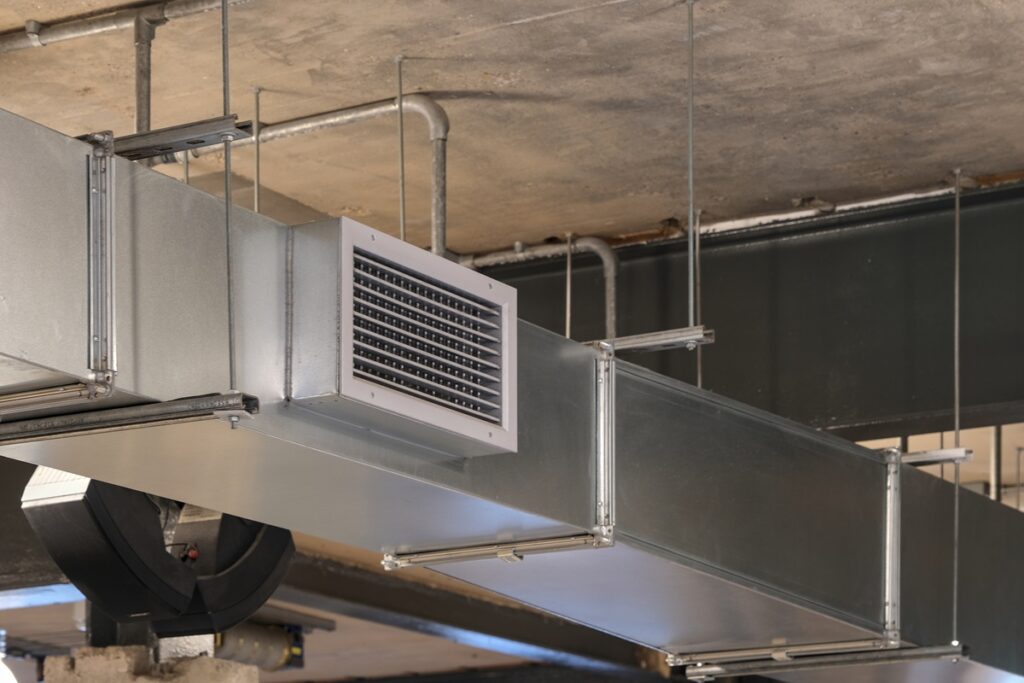
Duct design is equally important. Air must move quickly enough to keep material suspended, but excessive velocity increases fan energy, noise, abrasion and filter loading. Poorly balanced branches can starve one capture point while another draws more air than needed. Variable-frequency drives can maintain required airflow as filter resistance changes, but only when the correct design setpoint has been established and verified.
For new lines, computational airflow modelling can expose recirculation zones, pressure losses and uneven filter loading before fabrication. It does not replace commissioning measurements, but it can prevent expensive problems being built into the plant.


Prove It Still Works: LEV Testing and Maintenance
For UK manufacturers, extraction used to control airborne dust will commonly form part of a Local Exhaust Ventilation (LEV) system. Effective design and commissioning are essential, but compliance does not end once the system is switched on. Under COSHH, LEV provided to control exposure to hazardous substances must be maintained in efficient working order and undergo a thorough examination and test by a competent person at least every 14 months in most applications.
That examination should assess the complete system rather than simply confirming that the fan runs or the filters appear clean. HSE describes the thorough examination and test as including a physical inspection, airflow measurements and professional judgement about whether the LEV continues to control the contaminant effectively. The resulting report should identify defects and prioritise remedial action.
Routine maintenance between statutory examinations is just as important. Damaged ducting, blocked filters, worn fan components, leaking seals and alterations to machinery or production layouts can progressively reduce capture performance. A hood that originally controlled a tipping operation effectively may no longer do so after production speeds, ingredients or operator positions change.
For manufacturers adopting connected dust control, LEV testing also provides valuable baseline data. Airflow, pressure and system performance recorded during commissioning and subsequent examinations can be compared with live differential-pressure and airflow monitoring, helping engineering teams identify deterioration before it becomes an exposure problem or production failure.
The important distinction is that an LEV test is not the maintenance programme—it verifies whether that programme is keeping the control system effective.
Test the Dust: Designing Around Real Material Behaviour
“Food powder” is not a useful engineering specification. Particle size, moisture, fat content, temperature, bulk density, cohesiveness and electrostatic behaviour all affect how a dust travels, deposits and releases from filter media.
Combustibility is equally specific. Two samples of the same ingredient can behave differently after changes in milling, drying or formulation. Test data such as maximum explosion pressure, deflagration index, minimum explosible concentration and minimum ignition energy informs the dust hazard analysis and the selection of venting, suppression, isolation and electrical equipment.
Filtration must also match the material. Surface-loading nanofibre or membrane media can help fine dust release, while anti-static constructions may be required where charge accumulation forms part of the hazard assessment. Sticky, hygroscopic or high-fat dust may demand lower air-to-media ratios, different pleat geometry, temperature control or another collector type.
The correct procurement question is not “Which filter is best?” but “Which complete system has been validated for this dust, process, loading pattern and cleaning method?”
Clean on Condition: Making Pulse-Jet Systems More Efficient
Pulse-jet cleaning uses compressed air to reverse flow through the filter and dislodge the dust cake. Older systems often pulsed on a fixed timer, wasting air and repeatedly stressing media whether cleaning was needed or not.
Differential-pressure control initiates cleaning as resistance rises and adjusts the interval between pulses. More advanced controls can coordinate pulse demand with fan speed, line state and hopper discharge, maintaining airflow while limiting unnecessary compressed-air use.
The air system itself can be the hidden weakness. A leaking diaphragm valve, weak supply pressure or damaged manifold can make a healthy filter bank appear exhausted. Acoustic imaging cameras now allow maintenance teams to visualise compressed-air leaks in noisy factories without stopping production. Combined with pressure monitoring and pulse-valve diagnostics, this turns an invisible utility loss into a targeted repair. sure trend after cleaning is equally revealing. If differential pressure no longer falls as expected, the cause may be blinded media, moisture, incorrect pulse pressure, hopper bridging, damaged valves or a change in the dust. Replacing filters without finding the cause simply restarts the failure cycle.
The Collector Becomes Connected: From Alarms to Condition-Based Maintenance
Dust collectors have traditionally sat outside the main production data architecture. They ran until an alarm appeared, visible dust returned or airflow dropped enough to affect the line. Connected monitoring is closing that gap.
Current platforms can track differential pressure, airflow, particulate trends, compressed-air pressure, pulse activity, fan operation, temperature and hopper conditions. Engineering teams can see how a collector behaves through product changes, sanitation cycles and seasonal conditions rather than relying on isolated manual readings. pressure trend may indicate a filter nearing the end of useful life. An abrupt fall can suggest damaged media or an open access door. Low pulse pressure can expose a compressed-air problem before filters blind, while clean-side particulate trends can trigger investigation before dust reaches the workplace or returned air.
Across multiple sites, central teams can compare similar collectors, identify units consuming more energy or air, benchmark filter life and prioritise capital spending. The practical goal is condition-based maintenance: recognising drift early enough to intervene during planned downtime rather than during a production failure.
One Hazard, Different Rulebooks: DSEAR, COSHH and NFPA 660
For UK plants, COSHH governs substances hazardous to health, while DSEAR requires employers to assess and control risks from dangerous substances capable of causing fire or explosion. Dust zoning, ignition control, equipment selection and explosion protection must be based on the actual process and hazard assessment, not a generic collector description. facturers with US operations, customers or insurers, NFPA 660 is increasingly important. The 2025 standard consolidates combustible-dust requirements previously spread across several NFPA documents, bringing common fundamentals and industry-specific chapters into one structure. Dust hazard analysis sits at its centre. does not replace UK or EU law, but multinational groups may use it to create a consistent corporate benchmark. It may also influence insurer expectations and engineering specifications on projects that cross jurisdictions.
European procurement teams must also prepare for the EU Machinery Regulation, applying from 20 January 2027. Explosion-risk equipment will still need to satisfy relevant ATEX requirements, but machinery projects should be reviewed early so conformity assessment, technical documentation and the responsibilities of manufacturers and integrators are clearly allocated. ainability reporting picture has changed too. The EU has narrowed CSRD scope to companies with more than 1,000 employees and net annual turnover above €450 million. Many mid-sized operators will no longer report directly, although customers and group owners may still request energy and risk data. For dust control, the stronger justification remains operational: measured airflow, lower energy use, documented maintenance and auditable risk controls. ging Is Part of the Dust Map: Protecting High-Speed Lines
Dust is not confined to ingredient handling. Paperboard and corrugated materials shed fibres during cutting, creasing, carton erection and conveying. Label and flexible-packaging converting can create trim fragments, adhesive contamination and electrostatically charged particles. Powder escaping upstream can then migrate into seal areas, coding heads and inspection equipment.
The effects often begin as small losses: more vision-system rejects, frequent inkjet cleaning, inconsistent heat seals or fibres accumulating around servo drives. Repeated across a high-speed line, these interruptions reduce overall equipment effectiveness.
Extraction should therefore follow the whole material journey, including cutting, trim removal, bag filling, checkweighing and secondary packaging. If food and packaging dusts enter the same system, the hazard assessment must consider the combined mixture.
A line upgrade that doubles throughput can also change dust release, airflow demand and accumulation rates even when the ingredients and collector remain unchanged. Dust control belongs in management of change, not in the post-commissioning snagging list.
## Hygiene and Protection: Designing for Cleaning, Allergens and Deflagration
A collector can protect hygiene or quietly undermine it. Ledges, inaccessible corners and poor discharge design trap product. Dirty-side filter changes can return accumulated allergens to the room, while shared ductwork may create an overlooked route between lines.
Smooth surfaces, accessible inspection points, clean-side filter change and controlled discharge reduce these risks. Where wet cleaning is required, the collector must be specifically designed for it; adding water to a dry system can create corrosion, microbial growth, caking and blocked discharge.
Housekeeping is equally critical. HSE’s recent prosecution highlighted compressed-air blowdown and dry sweeping, which return settled material to the breathing zone. Suitable industrial vacuum systems, or wet cleaning where appropriate, remove dust rather than redistribute it. ble-dust systems also need engineered protection. Depending on the assessment, this may include explosion venting, flameless venting, suppression, pressure-resistant construction and isolation that prevents flame and pressure travelling through ductwork. Spark or ember detection can add another layer where hot particles may be transported towards the collector.
A dust hazard analysis is not a one-off document. Changes in recipe, particle size, throughput, duct routing, filter media, fan speed or discharge equipment can alter the risk and should trigger review before production resumes.
Count the Avoided Losses: Building a Real ROI Case
The return on dust control is distorted when buyers compare only collector prices. A cheaper unit becomes expensive if it operates at high pressure drop, pulses continuously, consumes filters or forces repeated shutdowns.
A stronger calculation includes fan energy, compressed air, replacement media, disposal, maintenance access, cleaning labour, exposure monitoring, insurance expectations, lost production and the cost of a failed audit or contaminated batch. Connected monitoring helps make those costs visible: pulse counts show how hard the system is working, fan load reveals the energy effect of rising resistance and filter-life trends expose false economies.
The greatest returns are the events that never happen—the occupational asthma case, allergen carryover, blocked duct, damaged encoder, fire, recall or weekend shutdown. They may be difficult to place neatly in a capital request, but they are where dust control creates most value.
The most effective programmes start with a plant-wide survey, test representative dusts, verify exposure and explosion hazards, measure capture airflow and inspect hidden accumulation points. Improvements then follow the right order: enclose the source, correct the hood, balance the duct, repair leaks, validate the media, improve housekeeping, install protection and add monitoring.
Digital intelligence cannot rescue bad extraction, and premium filters cannot correct an undersized duct. When the fundamentals are sound, however, the collector becomes more than a utility. It becomes a measurable production asset protecting people, product, uptime and trust.
What is the best dust control system for a food or beverage plant?
There is no universal best system. The correct solution depends on the dust’s particle size, moisture, stickiness, allergen status and combustibility, as well as the process temperature, loading pattern and required airflow. Effective projects begin with source-capture design and representative dust testing before the collector, filter media, cleaning system and explosion protection are selected.
How does DSEAR apply to combustible food dust?
DSEAR requires UK employers to assess and control fire and explosion risks from dangerous substances, including combustible dust. This may involve dust testing, hazardous-area classification, ignition control, suitable equipment, housekeeping, explosion venting or suppression, and isolation of connected plant. Measures must reflect the specific process and risk assessment.
What is NFPA 660 and why does it matter outside the US?
NFPA 660 is the 2025 US standard for combustible dusts and particulate solids. It consolidates requirements previously divided across several standards and includes dust hazard analysis and industry-specific provisions. It is not UK law, but multinational businesses, engineering groups and insurers may use it as a corporate or project benchmark.
How often should a dust collector be inspected?
Inspection frequency should be based on the risk assessment, manufacturer’s instructions, dust loading and operating history. Operators should monitor airflow and differential pressure routinely, while planned inspections should cover filters, seals, valves, compressed-air supply, hoppers, discharge equipment, duct deposits, explosion-protection devices and alarms. Abnormal trends should trigger investigation rather than waiting for the next scheduled service.
Can filtered air from a dust collector be returned to the production area?
Recirculation may be possible, but only after a suitable assessment of health, hygiene, allergen and explosion risks. The system may require high-efficiency secondary filtration, particulate monitoring, automatic shut-off and validated performance. Return air should never be used simply to save heating energy without confirming that contaminants cannot re-enter the workplace or product environment.