

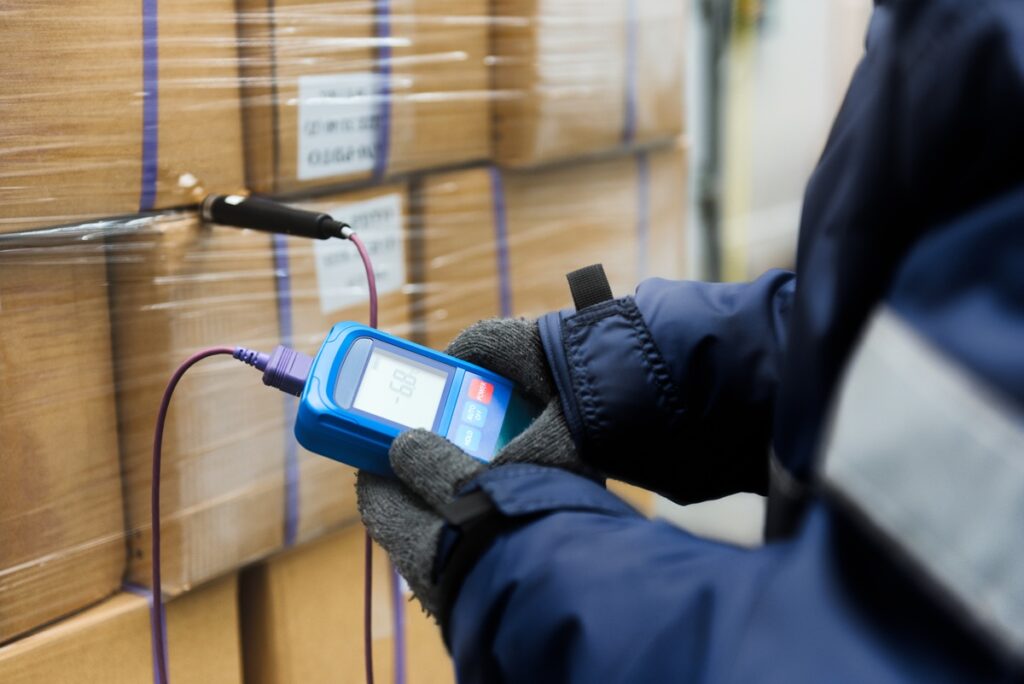
Industry Insight: Temperature control is moving from reactive monitoring to predictive management. The strongest chilled food operations are now using connected sensors, automated alerts, digital records and energy optimisation systems to reduce product risk, improve audit readiness and protect margin. The legal threshold remains important, but best practice increasingly depends on maintaining tighter internal standards, identifying thermal drift early and linking temperature performance directly to batch, logistics and quality data.
Temperature control has always sat at the heart of chilled food production, but its role is changing. What was once treated as a compliance requirement is now becoming a strategic discipline, connecting food safety, energy performance, shelf-life protection, traceability, packaging design and supply chain resilience.
For manufacturers, the challenge is no longer simply keeping products cold. It is proving that temperature has been controlled at every critical point, from intake and production through high-care handling, storage, dispatch, transport and retail handover. In an operating environment shaped by tighter compliance expectations, volatile energy costs, refrigerant transition and rising waste reduction targets, chilled food businesses are being pushed to build cold chain systems that are both more precise and more intelligent.
From Cold Storage to Cold Chain Intelligence
In chilled food manufacturing, temperature control is not a single process. It is a chain of connected decisions. Raw material intake, preparation rooms, high-care areas, chillers, blast cooling, packaging lines, loading bays and vehicle interfaces all create potential points of thermal variation.
The legal requirement for chilled food remains clear: cold food must be kept at 8°C or below in England, Wales and Northern Ireland. In practice, the Food Standards Agency recommends setting fridges at 5°C or below to allow for normal fluctuations, and the chilled food sector commonly treats 5°C as a safer operational target for many products.
That distinction matters. A site may meet the legal threshold but still expose itself to shorter shelf life, increased waste, customer complaints or retailer non-conformance if its temperature profile is inconsistent. For ready meals, dairy products, prepared salads, cooked meats, chilled desserts and other high-risk categories, the commercial consequences of temperature instability can be immediate.
This is why the conversation is shifting from “did the product stay below the limit?” to “how stable was the product environment, where did variation occur, and could the system predict the risk before it became a failure?”
Predictive Systems Replace Reactive Alarms
Traditional temperature monitoring has often relied on fixed thresholds. A sensor records a breach, an alarm is triggered and the team responds. That remains essential, but it is no longer enough for high-performing chilled operations.
The next step is predictive cold chain management. By combining data from refrigeration systems, room sensors, door openings, vehicle telematics, dock activity, product flow and maintenance records, manufacturers can identify patterns that indicate rising risk. A compressor may be working harder than usual. A loading bay may show recurring heat gain at certain times of day. A high-care room may recover temperature more slowly after cleaning. Individually, these may not trigger a formal breach. Together, they can signal that control is weakening.
AI-supported platforms are beginning to turn these signals into earlier interventions. Instead of waiting for a temperature excursion, the system can flag thermal drift, predict equipment failure or recommend changes to airflow, maintenance scheduling or loading practice. For manufacturers working with short shelf-life products, the value is not only in compliance. It is in protecting saleable life, reducing product holds and preventing avoidable waste.
Digital twins add another layer. By creating virtual models of chilled warehouses, production areas or distribution flows, businesses can simulate how airflow, product density, door activity and equipment layout affect temperature stability. This can support decisions on racking design, automation, refrigeration upgrades and loading bay configuration before capital is committed.

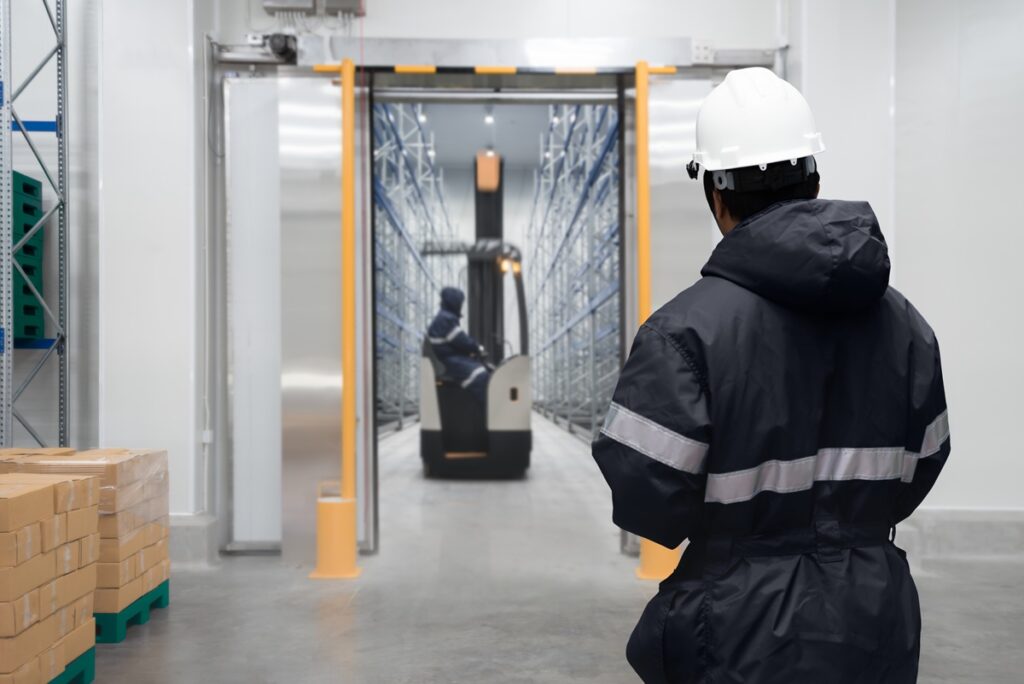
The Loading Bay Is Now a Critical Control Point
The weakest point in many chilled operations is not the cold store itself. It is the transition between controlled environments.
Loading bays are exposed to vehicle movement, door openings, external air, condensation risk, manual handling and time pressure. Even well-managed chilled facilities can suffer heat ingress during intake and dispatch if dock design, door discipline and vehicle preparation are poor.
This is driving interest in smarter loading environments. High-speed doors, insulated dock shelters, pneumatic seals, dock levellers, vehicle restraint systems and automated door controls are increasingly being viewed as food safety and energy tools, not simply logistics equipment. Where these systems are integrated with temperature monitoring, manufacturers can prove that product integrity has been protected during transfer.
Good practice also depends on process discipline. Vehicles should be pre-cooled where required. Doors should not be opened before the receiving environment is ready. Product should not wait in ambient zones while paperwork is resolved. For chilled and frozen products, even short periods of unmanaged exposure can reduce shelf-life confidence and increase the likelihood of dispute between manufacturer, haulier, distributor and customer.
Refrigeration Choices Are Becoming Strategic
Temperature control is also being reshaped by refrigerant regulation and decarbonisation. For years, many food businesses treated refrigeration plant as a background utility. That approach is becoming risky.
F-gas rules, phase-down pressures and restrictions on high global warming potential refrigerants are forcing manufacturers to review legacy systems, service availability and long-term investment plans. In Great Britain, restrictions already apply to the placing on the market of certain F-gas equipment, while wider European regulation is driving the market towards lower-GWP solutions and natural refrigerants.
For food and beverage sites, this creates both risk and opportunity. Older systems using high-GWP refrigerants may become more expensive to maintain as supply tightens and service options narrow. At the same time, investment in efficient refrigeration, heat recovery, variable-speed compressors and natural refrigerant systems can reduce exposure to future regulatory pressure.
Ammonia and CO₂ are already well established in industrial refrigeration, but they are not simple like-for-like replacements. Ammonia offers strong efficiency but requires careful safety management because of toxicity. CO₂ has a very low global warming potential but operates at high pressure and needs appropriate design expertise. A2L refrigerants introduce another consideration, as mildly flammable alternatives may require ventilation, leak detection, zoning and additional site planning.
The key point for manufacturers is that refrigeration decisions now affect compliance, insurance, maintenance planning, carbon strategy and operational resilience. They should not be left until a system reaches end of life.

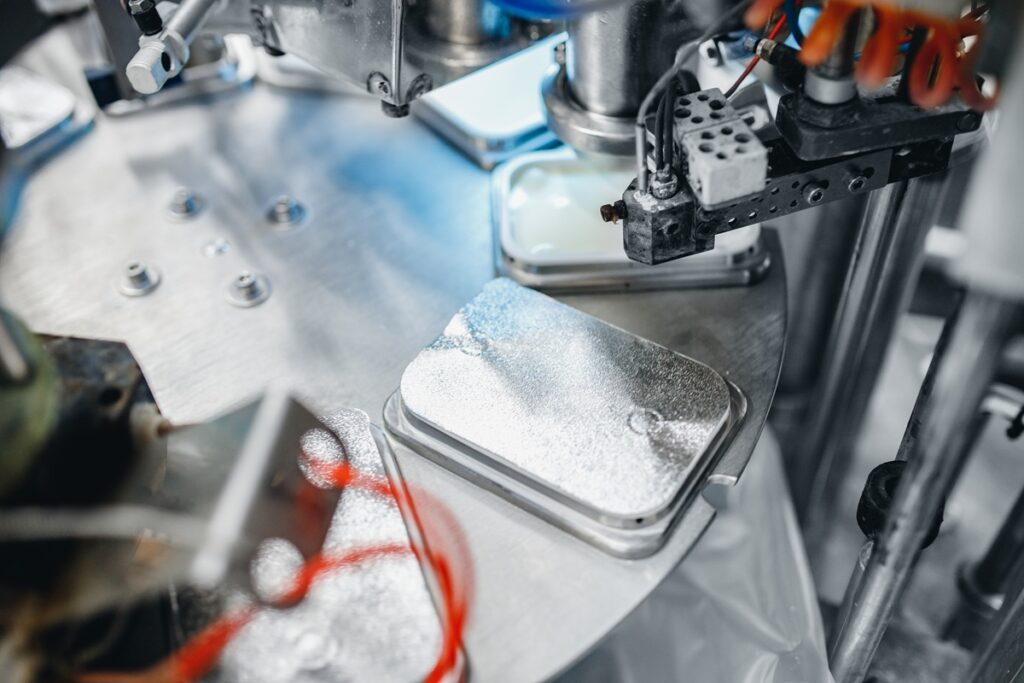
Energy Efficiency and Food Safety Must Work Together
Chilled production is energy intensive, and the pressure to cut consumption is growing. However, food manufacturers cannot treat energy efficiency as a simple exercise in raising set points or reducing refrigeration run time. The objective is controlled efficiency: using less energy while maintaining tighter and more reliable product conditions.
Modern systems can help by matching cooling demand to actual load, production schedules, room occupancy and ambient conditions. Variable-speed compressors, heat recovery, intelligent defrost cycles and demand-led refrigeration control can reduce wasteful operation without compromising safety. In some facilities, energy data is now being analysed alongside product temperature records, allowing teams to identify where poor process discipline is increasing both risk and cost.
For example, repeated door openings, poorly staged loading, overfilled chillers or badly maintained seals can all increase energy demand while weakening temperature control. Solving these issues delivers a double return: lower utility use and stronger cold chain integrity.
This is where temperature control becomes a board-level issue. It supports food safety, but it also contributes to carbon reduction, waste prevention, asset reliability and margin protection.
Packaging Faces a New Thermal Challenge
Packaging is another area where temperature control is becoming more complex. Chilled foods increasingly need packaging that is lighter, more recyclable and more resource-efficient, while still protecting product quality through distribution.
The EU Packaging and Packaging Waste Regulation entered into force in February 2025 and will generally apply from 12 August 2026. It introduces a more harmonised framework for packaging sustainability, recyclability and waste prevention across the EU, with implications for businesses placing packaging on the EU market.
For chilled food manufacturers, this creates a practical balancing act. Reducing material weight may support sustainability targets, but packaging still has to withstand condensation, stacking, chilled handling, transport vibration and temperature variation. Insulated packaging, liners, absorbent materials and modified atmosphere formats may all come under greater scrutiny as recyclability and waste rules tighten.
The opportunity lies in designing packaging as part of the cold chain, rather than as a separate purchasing decision. Materials, pack shape, pallet configuration, airflow, transit duration and retail handling all influence thermal performance. As sustainability requirements increase, packaging teams and technical teams will need to work more closely together to avoid unintended consequences.
Time-Temperature Indicators Add a New Layer of Evidence
Smart packaging is also moving into the temperature control conversation. Time-temperature indicators, or TTIs, provide a visual or digital signal based on cumulative temperature exposure. Unlike a standard temperature reading, which captures a moment in time, TTIs can help indicate whether a product has experienced conditions that may affect quality or safety over its journey.
Recent research continues to position TTIs as useful tools for monitoring temperature-sensitive perishable products through cold chain transportation.
For B2B supply chains, the value is partly operational and partly commercial. TTIs can support dispute resolution where responsibility for a cold chain break is unclear. They can help reduce unnecessary disposal where product has remained within acceptable limits. They can also provide additional confidence for premium chilled categories, foodservice supply and export markets.
They are not a replacement for validated temperature monitoring, but they can add another layer of evidence where risk, value or journey length justifies the cost.
Traceability Is Becoming More Granular
Temperature records are increasingly expected to connect with wider traceability systems. A standalone chart or logger download may no longer be sufficient for complex chilled supply chains. Manufacturers are moving towards records that link temperature data with batch numbers, production times, sanitation records, vehicle movements, customer orders and corrective actions.
This matters for audits, recalls and customer assurance. If a product is challenged, the business needs to demonstrate not only that the cold chain was controlled, but also which batches were affected, where the risk occurred and what action was taken.
The direction of travel is clear even outside the UK. The US FDA’s FSMA Food Traceability Rule was originally due for compliance in January 2026, but enforcement is now not expected before 20 July 2028. Even with that extension, the rule reflects a wider global movement towards more detailed electronic traceability for high-risk foods.
For UK and European manufacturers, the lesson is not that every business must follow US regulation. It is that major customers, exporters and multinational supply chains are moving towards faster, more granular, more digitally connected records.
Cold Chain Risk Is Also Climate Risk
Temperature control systems are being tested by changing external conditions. Heatwaves, transport disruption, longer dwell times, labour shortages and unpredictable logistics flows all increase pressure on chilled supply chains. At the same time, raw materials may arrive with different microbial risk profiles depending on season, origin, harvest conditions and transit history.
This does not change the fundamentals of HACCP, but it does increase the importance of rapid chilling, robust intake checks, validated cooling steps and strong supplier assurance. Chilled manufacturers cannot assume that historical temperature routines will remain adequate if the operating environment is changing around them.
The best systems will be those that combine validated procedures with live data. That means knowing not just what the procedure says, but whether the process is actually performing under real-world conditions.
Turning Temperature Control Into Competitive Advantage
For chilled food manufacturers, the next phase of temperature control is not about adding technology for its own sake. It is about building a more resilient operating model.
That starts with a clear audit of risk points. Where is product most exposed? Which rooms show the greatest variation? Are vehicles pre-cooled consistently? Are dock doors left open too long? Are refrigeration assets approaching a compliance or maintenance cliff? Are temperature records easy to retrieve, interpret and connect to batch data?
The answers will vary by site, but the direction is consistent. Temperature control is becoming more integrated, more data-led and more commercially important. It touches engineering, technical, operations, logistics, packaging and sustainability teams.
Manufacturers that treat it as a strategic discipline will be better placed to reduce waste, protect shelf life, satisfy customers and manage regulatory pressure. Those that continue to rely on fragmented records and reactive alarms may find that compliance becomes harder, energy costs rise and cold chain failures become more expensive to defend.
In chilled food production, cold is no longer just a condition to maintain. It is a performance measure, a risk signal and a source of operational advantage.
What temperature should chilled food be kept at in the UK?
Chilled food should be kept at 8°C or below in England, Wales and Northern Ireland. In practice, many food businesses target 5°C or below to allow for temperature fluctuations and provide a stronger margin of safety.
Why is 5°C often used as a chilled food target?
5°C is widely used because it provides a practical buffer below the legal 8°C threshold. This helps protect food safety, shelf life and product quality when doors open, loads move or equipment cycles during normal operation.
How can AI improve temperature control in chilled food production?
AI can improve temperature control by identifying patterns that suggest future risk. It can analyse sensor data, equipment performance, door activity and production schedules to predict thermal drift or refrigeration failure before a formal temperature breach occurs.
Why are loading bays important in cold chain management?
Loading bays are important because they are one of the most vulnerable points in the chilled chain. Poorly sealed docks, open doors, unrefrigerated waiting areas and delays during dispatch can all expose products to temperature variation.
How does packaging affect chilled food temperature control?
Packaging affects chilled food temperature control by influencing insulation, airflow, condensation management and product stability during storage and transport. As packaging sustainability rules tighten, manufacturers must ensure lighter or more recyclable formats still protect chilled product integrity.