



Industry Insight: Cutting is Now a Compliance-Controlled Process Modern slicing and dicing systems are no longer standalone machines but integrated data points within the smart factory. In 2026, cutting operations must deliver traceability, hygienic compliance and yield optimisation simultaneously. Equipment that cannot capture process data, support audit requirements and minimise waste now represents a growing operational and regulatory risk.
For decades, slicing, dicing and cutting systems were judged on speed, accuracy and durability. In 2026, those fundamentals remain, but they are no longer enough. The cutting room is rapidly evolving into a high-value data and compliance checkpoint, where yield optimisation, traceability and food safety converge.
This shift is being driven by tightening regulation, rising sustainability targets, and the integration of vision-guided robotics and real-time analytics into processing lines. For manufacturers, the implication is clear—cutting is no longer just about shaping product, but about maximising value, proving compliance and reducing waste at scale.
The commercial momentum reflects this shift. The global market for industrial food cutting equipment is valued at approximately $110 million in 2025 and is projected to reach over $150 million by 2032, with adoption of automated cutting solutions increasing by more than 40% in recent years. Investment is no longer optional—it is becoming foundational.

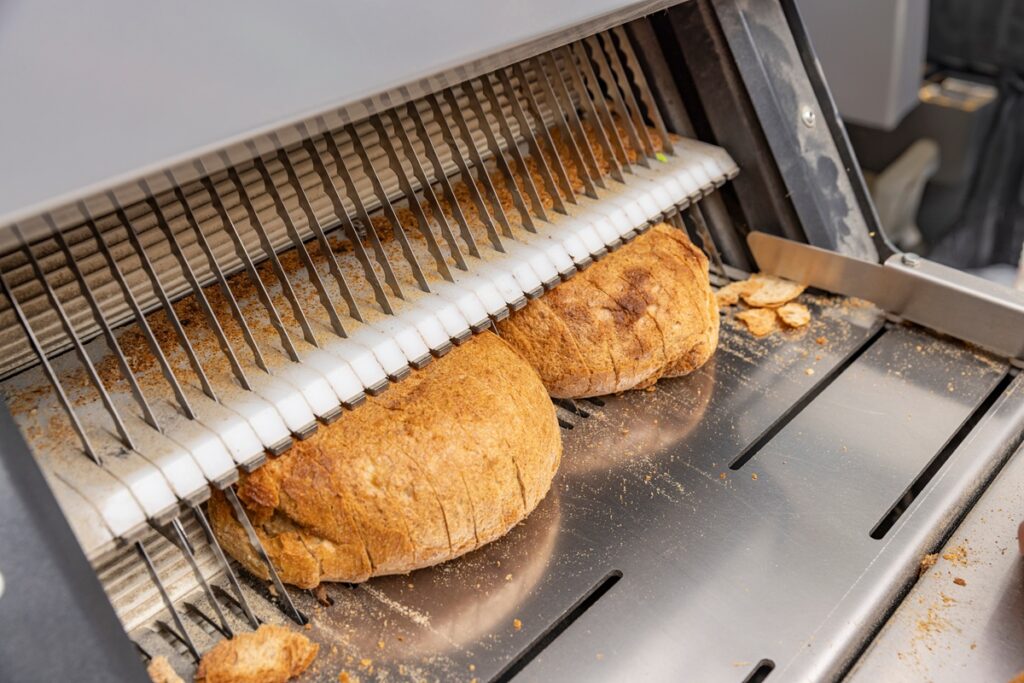
Compliance and Traceability: The New Non-Negotiables
Cutting operations now sit firmly within the spotlight of regulatory scrutiny. Under HACCP frameworks, slicing and dicing stages are classified as critical control points (CCPs), requiring strict monitoring, validation and documentation.
The introduction of SQF Edition 10, with audits now focused on pass/fail compliance and digital traceability integrity, reinforces this shift. Equipment must demonstrate not only hygienic performance, but also the ability to securely capture and store production data—placing new emphasis on cyber-secure, connected machinery.
At the same time, audit data highlights the scale of the challenge. Under BRCGS Food Safety Issue 9, equipment condition and hygiene account for approximately 59% of recorded non-conformities, making cutting equipment design, maintenance and cleanability a critical risk factor during inspections.
This is driving increased demand for equipment aligned with EHEDG hygienic design principles, alongside systems capable of automatically logging cleaning cycles, blade changes and operational parameters for audit readiness.
Alongside hygiene, material safety is also under review. Growing regulatory pressure on PFAS (“forever chemicals”) is accelerating the transition towards ceramic-coated and laser-textured blades, reducing reliance on traditional non-stick coatings while maintaining performance.
Looking ahead, preparations for Digital Product Passports (DPP) are further embedding cutting systems into the traceability chain. Modern equipment is now expected to capture Key Data Elements (KDEs) at the point of transformation, linking raw material batches directly to finished product outputs.

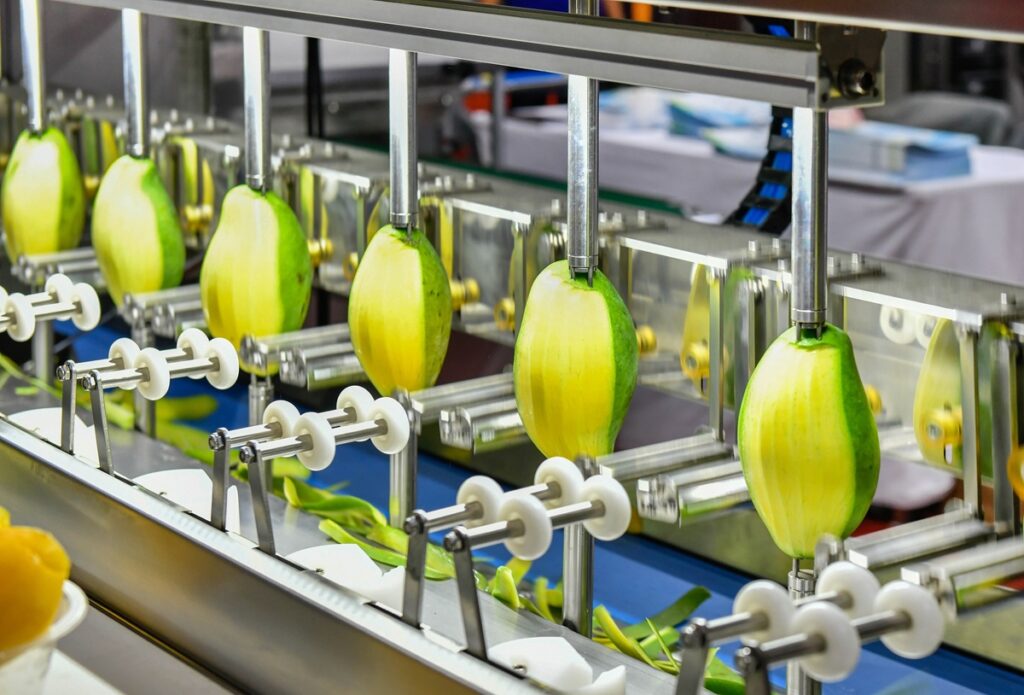
Visual Intelligence: From Surface Inspection to Internal Product Mapping
The evolution of cutting technology is being accelerated by advances in vision-guided systems and hyper-spectral imaging (HSI).
Unlike conventional inspection systems, HSI enables processors to analyse internal product composition, identifying defects such as bruising, voids or foreign material before cutting begins. This allows systems to make real-time decisions, adjusting cutting paths dynamically to avoid defects.
The result is a measurable improvement in yield and consistency. By combining 3D mapping with robotic control, modern cutting lines can optimise each individual cut, reducing waste while improving portion accuracy.
For high-volume processors, even marginal gains—often in the range of 1–2% yield improvement—can translate into substantial cost savings over time.
Precision Meets Versatility: Water-Jet, Laser and Hybrid Cutting Systems
While ultrasonic cutting remains a key technology, the cutting landscape is expanding rapidly.
Water-jet cutting is increasingly being deployed in protein and prepared meal applications, offering high-precision, cold cutting without generating heat or mechanical stress. This is particularly valuable for delicate or layered products where maintaining structure is essential.
Laser cutting, once considered niche, is gaining traction in specific applications such as bakery and fresh produce, where intricate shapes and minimal product deformation are required.
The most significant development, however, is the emergence of hybrid cutting systems. These combine mechanical slicing for speed with ultrasonic or precision finishing, allowing manufacturers to process complex, multi-textured products with greater consistency and efficiency.
The Sustainability Dividend: Designing for Yield, Not Waste
Sustainability in cutting is increasingly defined by how much product is retained, not how little energy is used.
Advanced optimisation software now enables edge-to-edge cutting strategies, significantly reducing end pieces and offcuts. In parallel, integrated sorting systems are enabling by-product valorisation, automatically diverting usable material into secondary product streams.
This has direct implications for both cost control and ESG performance. Reducing raw material waste improves margin while supporting compliance with tightening food waste reduction targets.
At the same time, integration with inline weighing and portion control systems ensures that every cut meets specification, reducing overfill and product giveaway—an often-overlooked source of inefficiency.
Hygienic Design 2.0: Faster Cleaning, Lower Labour, Reduced Risk
Labour shortages and audit pressures are accelerating the adoption of next-generation hygienic design.
Modern cutting systems now incorporate:
- Tool-less blade changeovers completed in under a minute
- Open, accessible designs aligned with hygienic engineering principles
- Components capable of withstanding high-pressure, high-temperature washdown environments (IP69K)
These features reduce downtime while directly addressing one of the most common causes of audit failure—inadequate equipment hygiene.
By simplifying cleaning procedures and reducing manual intervention, manufacturers can improve both operational efficiency and compliance outcomes.
Digital Twins and the Rise of the Autonomous Cutting Cell
The next phase of development is being driven by digital twins and predictive analytics.
By creating virtual models of cutting lines, manufacturers can simulate performance, test new product formats and optimise configurations before implementation. This reduces commissioning time, minimises disruption and supports faster product innovation.
At the same time, real-time monitoring of blade condition, vibration and performance is enabling predictive maintenance strategies. Equipment can now signal when intervention is required, reducing unplanned downtime and extending asset life.
In more advanced environments, this is evolving into service-based models, where performance monitoring and maintenance are managed remotely—supporting the transition towards autonomous production cells.
Cutting for New Formats: The Challenge of Plant-Based and Hybrid Products
The growth of plant-based and hybrid food products is introducing new challenges for cutting technology.
Unlike traditional proteins, these products often feature fibrous, layered or adhesive textures, requiring highly controlled cutting parameters to maintain structure and appearance.
This is driving demand for more adaptable systems capable of adjusting blade speed, pressure and cutting patterns in real time, ensuring consistency across increasingly diverse product formats.
Conclusion: Why the Cutting Room is Now a Strategic Control Point
The cutting room has moved far beyond its traditional role as a mechanical process step. It now sits at the intersection of quality assurance, regulatory compliance, sustainability and data intelligence.
For manufacturers, this shift redefines the value of cutting technology. Investment is no longer driven solely by throughput, but by the ability to deliver measurable improvements in yield, audit performance and operational resilience.
As the industry moves towards increasingly connected and automated production environments, the ability to cut with precision, intelligence and accountability will define competitive advantage in the years ahead.
What is the role of cutting technology in modern food manufacturing?
Cutting technology is now a critical control point in food manufacturing, directly impacting yield, compliance and product quality. Modern systems integrate with digital platforms to capture production data, support traceability and optimise processing efficiency across the production line.
How do modern slicing and dicing systems improve yield?
Modern slicing and dicing systems improve yield by using vision-guided robotics and optimisation software to minimise waste and maximise usable product. Technologies such as 3D mapping and dynamic path planning ensure precise cuts, reducing giveaway and improving portion consistency.
What regulations affect cutting equipment in the food industry?
Cutting equipment is affected by regulations including HACCP requirements, BRCGS Food Safety Issue 9 and SQF Edition 10. These frameworks require hygienic design, traceability, and documented control of processing stages, making cutting systems a key compliance point.
What is hyper-spectral imaging in food cutting?
Hyper-spectral imaging is an advanced inspection technology that analyses the internal composition of food products before cutting. It allows processors to detect defects such as bruising or foreign material, enabling systems to adjust cutting paths and improve product quality and safety.
How is automation changing slicing and dicing operations?
Automation is transforming slicing and dicing operations by enabling real-time monitoring, predictive maintenance and autonomous processing. Technologies such as digital twins and remote diagnostics allow manufacturers to optimise performance, reduce downtime and move towards fully automated production cells.