


Pumpkin spice has long been the defining flavor of autumn. McDonald’s is now testing whether customers are ready to welcome a different seasonal favorite.
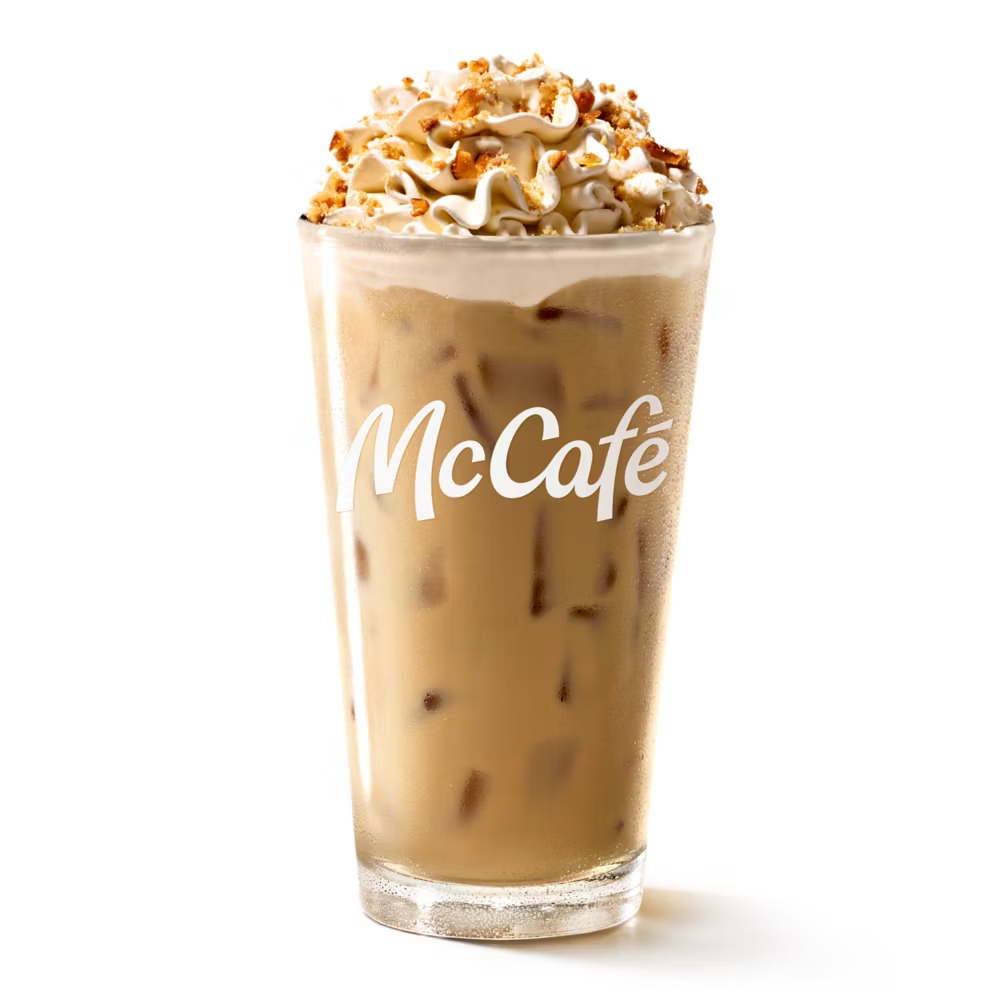
The quick-service restaurant has introduced a limited-time Caramel Apple Pie coffee flavor, adapting a familiar American dessert into several caffeinated beverage options. Beginning Aug. 18, customers can order it as an iced coffee, hot latte, iced latte or blended Frappe.
The seasonal product relies on recognition instead of radical innovation. Apple, caramel and coffee establish the core flavor profile, while whipped cream, salted caramel sauce and apple pie crumbles give the beverages a more indulgent, dessert-like finish.
The timing is also significant. The launch comes as McDonald’s increases its focus on beverages and as the broader coffee industry expands the range of flavors associated with fall. Pumpkin spice remains a major seasonal performer, but apple, caramel, maple and other profiles are creating additional ways for consumers to embrace the changing season.
That gives McDonald’s a way to capture fall coffee demand without releasing another standard pumpkin spice latte.
McDonald’s transforms apple pie into a coffee platform
The Caramel Apple Pie lineup follows an easy-to-understand formula. McDonald’s blends apple and caramel flavors into its coffee and finishes the drinks with whipped cream, salted caramel sauce and apple pie crumbles.
The menu includes a Caramel Apple Pie Iced Coffee, as well as hot and iced espresso-based lattes. Customers seeking a colder and sweeter option can choose the Caramel Apple Pie Frappe, which combines coffee and ice—an appealing format while summer temperatures continue across much of the country.
Offering multiple formats is increasingly important for seasonal beverage launches. Autumn flavors often arrive before cooler weather does, and iced coffee and blended beverages allow restaurant brands to promote fall products while consumers are still experiencing late-summer heat.
The strongest advantage may be the product’s built-in familiarity.
McDonald’s has offered apple pies in the United States since the late 1960s. In 1992, the company replaced its original fried version with an oven-baked pie and has since tested additional limited-time fillings, such as pumpkin, holiday custard and strawberries and cream.
By bringing apple pie into its coffee menu, McDonald’s creates a seasonal beverage connected directly to an established menu item. Customers can immediately understand the intended flavor without needing a detailed explanation.
The launch also gives the chain a stronger presence in a category traditionally dominated by specialty coffee businesses. A flavored latte covered with sauce and crumbles resembles the elaborate seasonal beverages sold by coffee shops more closely than a typical drive-thru coffee.
At McDonald’s, however, that specialty-style drink can be purchased alongside breakfast sandwiches, fries or burgers, making it a potential addition to visits customers already plan to make.
Autumn coffee is expanding beyond pumpkin spice
Pumpkin spice is not losing its relevance.
Starbucks, the brand most strongly linked to the modern pumpkin spice movement, began returning pumpkin-flavored packaged coffee, creamers and ready-to-drink beverages to U.S. grocery stores in August. The annual rollout continues to highlight the flavor’s substantial commercial strength.
Even so, pumpkin no longer defines the entire fall beverage market.
Food and beverage manufacturers and restaurant operators are increasingly turning to caramel, apple, maple and pecan to communicate seasonal relevance. These ingredients evoke cool weather and familiar autumn desserts while offering consumers an alternative to an increasingly common flavor combination.
Caramel apple is especially effective because both components are widely recognized. Apple delivers the seasonal cue, while caramel adds the sweetness and indulgence consumers often expect from a premium coffee drink.
McDonald’s is further strengthening the concept by linking it to an item already associated with the brand. That gives the product a point of difference from a standard caramel apple latte that could be introduced by virtually any coffee retailer.
The strategy reflects an important principle behind limited-time offers in the fast-food industry. Novel products can generate interest, but excessive complexity may create confusion. Seasonal items still need to communicate their appeal immediately.
“Apple pie, but in a coffee” requires little interpretation.
Limited-time menus also create a sense of urgency. Because the product is not expected to remain available indefinitely, customers have a reason to visit before the promotion ends. Social media conversation and consumer curiosity can increase that pressure, particularly when the item offers a familiar alternative to the season’s leading flavor.
For McDonald’s, the Caramel Apple Pie drink delivers novelty while remaining comfortably within consumers’ existing expectations.
McDonald’s is making a broader beverage play
The new coffee range stands out in part because it follows several recent efforts by McDonald’s to make beverages a more prominent part of its restaurant strategy.
Earlier in August, the company partnered with Red Bull on energy refreshers and broadened its crafted soda lineup. These additions complement McCafé coffee and other caffeinated and non-caffeinated drinks, expanding the occasions when customers may choose McDonald’s primarily for a beverage.
The direction can be traced back to CosMc’s, the company’s beverage-centered restaurant test. The concept featured a wider specialty drink selection, with products positioned closer to those found at coffee shops and soda-focused chains. McDonald’s shut the five CosMc’s pilot locations in 2025, but aspects of the experiment appear to remain visible in its wider beverage strategy.
That outcome is worth noting. Ending a standalone concept does not mean the company has discarded the insights gained from testing it.
Beverages give restaurant operators another opportunity to attract customers outside traditional meal periods. A morning coffee purchase, an afternoon caffeine stop or a cold drink picked up on the way home does not require a complete meal. When a beverage is distinctive enough, it can become the primary reason for a visit rather than a side order.
McDonald’s has the national footprint and operating scale to compete for those occasions. Its challenge is creating a compelling reason for consumers to use the drive-thru when coffee chains, convenience stores and increasingly advanced beverage concepts are pursuing the same demand.
Caramel Apple Pie coffee provides one potential solution. It pairs an established McDonald’s menu association with the features of contemporary specialty beverages, including multiple serving formats, indulgent toppings, customization potential and limited-time availability.
It also enables the brand to participate in fall coffee without going head-to-head with every pumpkin spice product on the market.
That could ultimately be the launch’s most notable feature. McDonald’s does not have to displace pumpkin spice to benefit from seasonal beverage traffic. It simply needs to give customers another familiar flavor associated with fall.
This year, the company is counting on apple pie to fill that role.
